
Three core advantages of cloud ERP: super performance, multiple security guarantees, and revolutionary implementation efficiency
Cloud based new paradigm for enterprise digital transformation
In the era of digital economy, the cloud migration of enterprise resource planning systems has become an irreversible strategic trend. Compared with traditional locally deployed ERP systems, cloud ERP has brought fundamental changes to enterprise management with its unique technical architecture and service model. The super performance, multiple security guarantee systems, and revolutionary implementation efficiency of cloud ERP together constitute its three core advantages that distinguish it from traditional solutions, driving enterprises to achieve digital transformation and upgrading at lower costs and higher efficiency.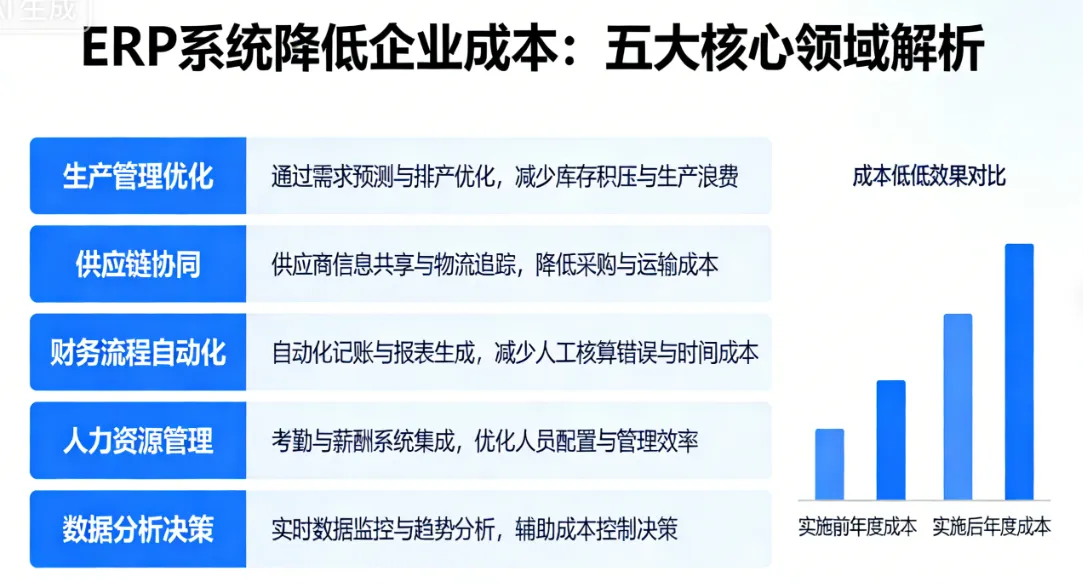
Super performance: Business peak response capability supported by elastic architecture
The performance advantage of cloud ERP is first reflected in the progressiveness of its underlying architecture. Based on the elastic scalability characteristics of cloud computing platforms, cloud ERP can dynamically adjust computing, storage, and network resources according to changes in enterprise business load. When enterprises face sales peaks such as "Double Eleven" and "618" or business pressure of month end settlement, the system can automatically expand resources to cope with the surge in concurrent requests; During business downturns, excess resources are automatically released to save costs. This flexibility enables enterprises to avoid overinvesting in hardware facilities to cope with potential peak demand, achieving maximum resource utilization and cost optimization.
In terms of data processing capabilities, cloud ERP leverages cloud distributed computing and big data technology to efficiently handle massive amounts of business data for enterprises. Advanced technologies represented by in memory computing have shortened the generation time of complex financial statements from hours in traditional systems to minutes or even real-time availability. After adopting cloud ERP, the efficiency of daily sales data analysis and inventory replenishment calculation in a certain retail enterprise has increased by nearly 20 times, enabling management to make accurate decisions based on almost real-time data, greatly enhancing the company's response speed to market changes.
The high availability design of cloud ERP further ensures business continuity. Mainstream cloud service providers deploy multiple data centers globally, ensuring system service level agreements reach 99.9% or even higher through cross regional redundancy and automatic failover mechanisms. This means that the unplanned downtime of enterprises throughout the year will be controlled within a few hours, far exceeding the availability level of most self built data centers. This high availability is particularly suitable for cross regional group enterprises, ensuring that global branches can access the system stably at any time and supporting 24/7 uninterrupted operation.
Multiple security guarantees: specialized protection system surpasses the self built ability of enterprises
Security is often the biggest concern for enterprises when it comes to cloud ERP, but in fact, professional cloud ERP providers invest and have capabilities in the security field far beyond the self built level of the vast majority of enterprises. The security guarantee of cloud ERP is a multi-level and comprehensive system, covering multiple dimensions such as physical security, network security, application security, and data security.
At the physical security level, cloud data centers adopt strict access control, video surveillance, biometric recognition, and disaster prevention design to ensure the physical security of infrastructure. In terms of network security, cloud service providers have deployed advanced technologies such as next-generation firewalls, intrusion detection and defense systems, and DDoS protection, building an enterprise level network security protection system. Compared to the single protection built by enterprises themselves, cloud based protection is more professional, comprehensive, and can be updated in real-time to respond to the latest threats.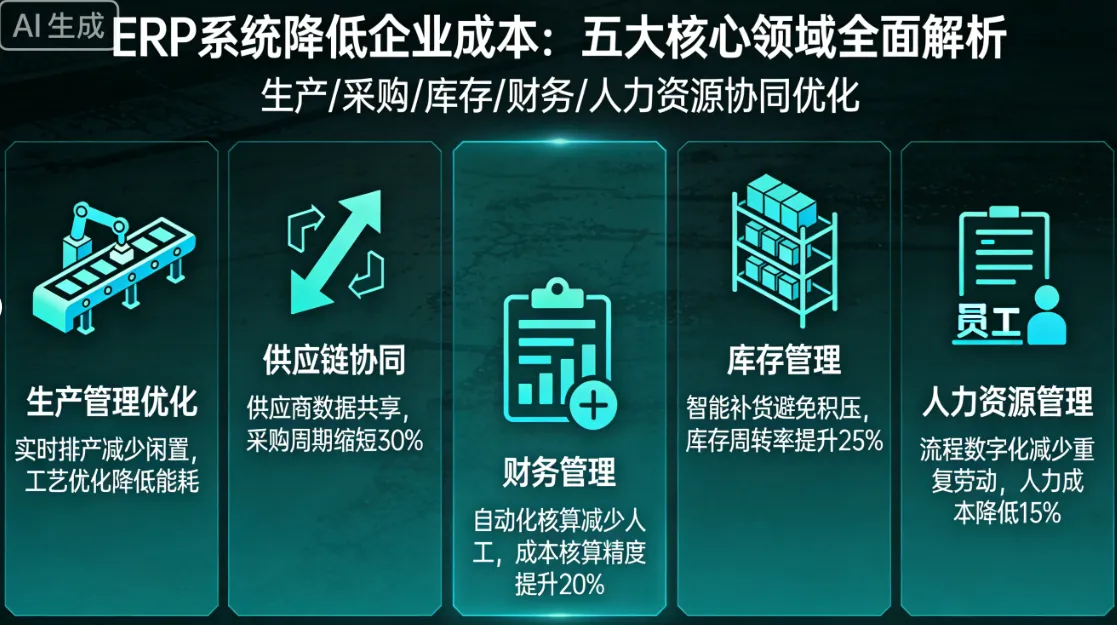
Data security is the core of cloud ERP security system. Through end-to-end encryption technology, both transmitted and statically stored data are protected by high-strength encryption. Refined permission management and access control ensure that data is only visible to authorized personnel, and all data access behaviors are recorded and audited in detail. Cloud service providers also provide comprehensive data backup and disaster recovery solutions, typically including cross regional redundant backup and fast recovery mechanisms, to ensure that enterprise data is not lost even in extreme situations.
Compliance support is another important manifestation of the security advantages of cloud ERP. Leading cloud service providers have passed various international and domestic security certifications such as ISO 27001, SOC 2, GDPR, and Level 3 security, which can help enterprises meet complex compliance requirements in different regions and industries. When new regulations are introduced, cloud service providers will update their compliance framework in a timely manner, and enterprises do not need to invest separate resources in research and adaptation, greatly reducing compliance costs and risks.
Revolutionary Implementation Efficiency: A Leap in Deployment Speed from Months to Weeks
The efficiency advantage of implementing cloud ERP may be its most disruptive feature. Traditional on premises ERP projects often require implementation cycles of several months or even years, while cloud ERP reduces this time to weeks or even days through standardized and modular design. This efficiency revolution stems from several key features of cloud ERP: pre configured industry best practice templates, simplified infrastructure preparation, and continuous delivery update modes.
Based on a deep understanding of various industries, cloud ERP providers have pre-set business process templates and configuration solutions that are in line with industry characteristics. Enterprises do not need to design every business process from scratch during the implementation process, but can make moderate adjustments based on these best practices. This can not only significantly shorten implementation time, but also help companies introduce validated management experience and avoid repeated trial and error. After adopting the industry solution of cloud ERP, a manufacturing enterprise has shortened the implementation cycle from the traditional estimated 9 months to 11 weeks, and the business processes have become more standardized and efficient after going online.
Cloud ERP eliminates complex hardware procurement, installation, and configuration processes. Enterprises do not need to purchase servers, storage devices, or set up network environments. All infrastructure is provided and maintained by cloud service providers. The implementation team can focus on streamlining business processes and system configuration without being constrained by hardware preparation progress. At the same time, cloud ERP supports a phased and gradual deployment strategy, allowing enterprises to first launch core modules to quickly gain value, and then gradually expand functions according to actual needs, reducing project risks and implementation pressure.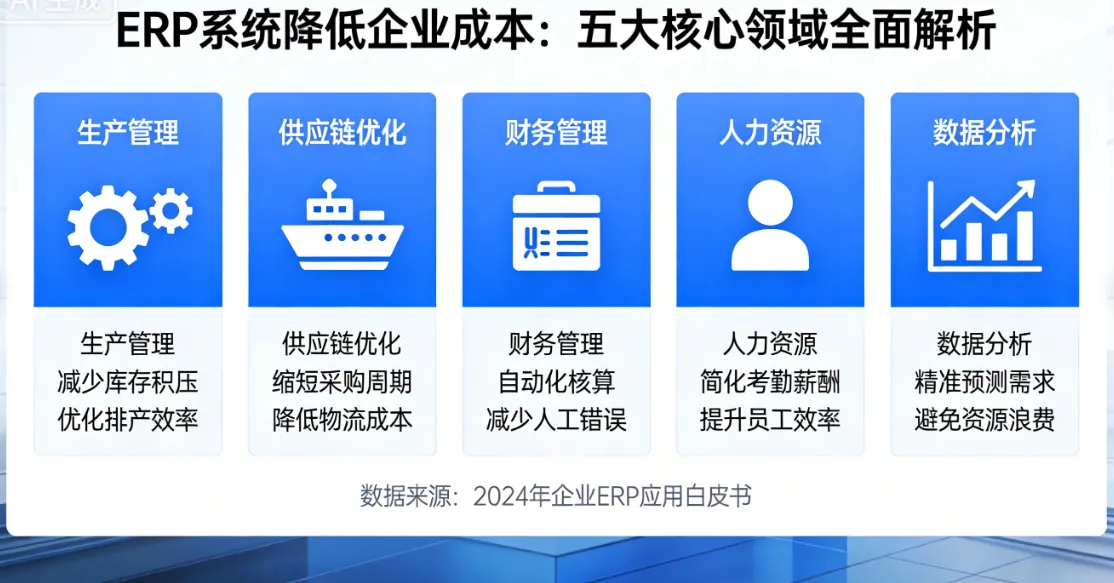
The continuous delivery model has completely changed the traditional ERP upgrade and maintenance methods. Cloud service providers will regularly and seamlessly push new features, performance optimizations, and security updates to ensure that enterprises always run on the latest and most secure system versions. Enterprises no longer need to plan complex upgrade projects, nor do they have to worry about security risks or outdated features caused by outdated versions. This "always online, always up-to-date" model enables enterprises to continuously obtain business value brought by technological innovation and maintain a competitive advantage.
The comprehensive value created by integrating advantages
The three core advantages of cloud ERP are not isolated, but an organic whole that reinforces and synergizes with each other. Superb performance ensures that the system can efficiently handle the constantly growing business needs of enterprises; Multiple security guarantees provide professional protection for enterprise data assets beyond their own capabilities; The revolutionary implementation efficiency enables enterprises to quickly respond to market changes and seize business opportunities. The combination of these three makes cloud ERP not only an upgrade in technology, but also a revolution in enterprise management models and business thinking.
For enterprises seeking to establish a competitive advantage in the digital age, cloud ERP not only provides cost savings and efficiency improvements, but more importantly, it endows them with unprecedented agility, security, and innovation capabilities. In a rapidly changing market environment, this comprehensive ability often determines whether a company can adapt to the future and lead change. With the continuous maturity of cloud computing technology and the increasingly perfect cloud ecosystem, cloud ERP will inevitably become a standard configuration for enterprise digital transformation, promoting more enterprises to move towards a new development stage of intelligence, networking, and platformization.