
The main function of ERP software: analysis of the core functions of enterprise resource planning
The main function of ERP software: analysis of the core functions of enterprise resource planning
In the digital age, the operational management of enterprises has shifted from "decentralized control" to "centralized collaboration". ERP (Enterprise Resource Planning) software, as the core tool for integrating enterprise resources throughout the entire process, has long broken through the limitations of traditional financial management and become the "digital hub" connecting people, finance, materials, production, supply, and sales. Whether it is the standardized management of small and medium-sized enterprises or the large-scale expansion of large enterprises, ERP software can optimize resource allocation, reduce operating costs, and enhance core competitiveness through standardized processes, intelligent control, and data-driven decision-making. This article will delve into the core functions of ERP software, break down its key role in enterprise operations, help companies better understand the value of ERP software, and assist them in achieving efficient management upgrades.
The core value of ERP software is essentially to "break down information silos and achieve resource collaboration". In traditional enterprise management models, departments such as procurement, production, inventory, finance, and sales operate independently, with data scattered across different tables, systems, or employee hands, lacking unified integration and synchronization, resulting in delayed information transmission, high communication costs, and lack of decision-making basis. For example, if the procurement department is not clear about the actual inventory balance, it is easy to have duplicate purchases or procurement shortages; The sales department is not aware of the production progress and cannot accurately promise delivery dates to customers; The finance department needs to manually summarize data from various departments, which is not only inefficient but also prone to data errors. ERP software connects all core business processes of the enterprise by building a unified digital management platform, achieving real-time data synchronization and closed-loop process control, enabling efficient collaboration among departments and maximizing the value of enterprise resources.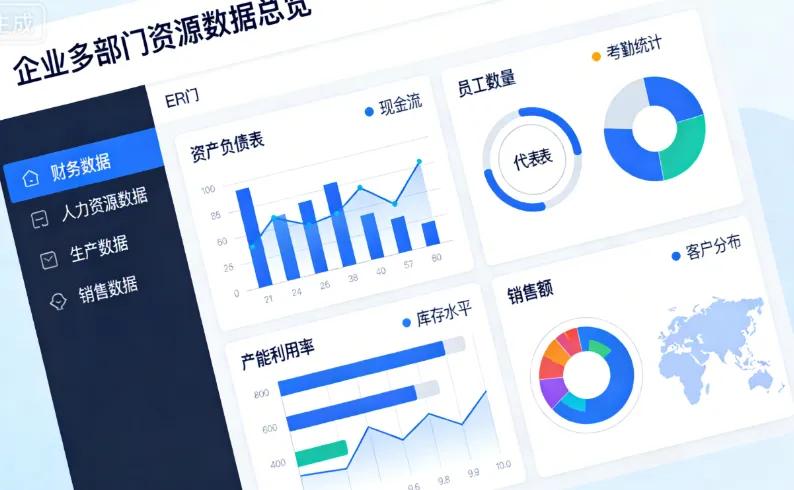
Resource integration and collaborative control are the most fundamental and core functions of ERP software, covering the entire process of enterprise operation. The procurement and inventory management modules are the key to solving the problem of "resource waste and control disconnection" in enterprises. In the procurement process, ERP software can achieve full process digital control from procurement demand submission, supplier screening, purchase order issuance, to goods acceptance and warehousing, payment settlement. Enterprises can establish a comprehensive supplier profile through the system, enter supplier qualifications, quotations, supply cycles, cooperation history and other information, and screen high-quality suppliers through data-driven rating to avoid purchasing premiums; At the same time, the system can automatically generate procurement plans based on inventory levels and production needs, eliminating blind procurement and reducing capital occupation.
In terms of inventory management, ERP software supports refined inventory control for all categories and specifications, establishing unique files for each material and product, and recording real-time lifecycle data such as inbound, outbound, transfer, inventory, and loss. Management personnel can easily view key information such as real-time inventory status, distribution, and turnover rate through the backend, without the need for manual reconciliation. In addition, the system is equipped with an intelligent inventory warning function, which can set inventory thresholds based on production and sales rhythms. When inventory falls below the minimum threshold, a replenishment warning will be automatically triggered; When inventory exceeds the maximum threshold, a backlog warning is triggered to help companies adjust their strategies in a timely manner, achieve dynamic inventory balance, avoid stockouts and supply disruptions that affect production and sales, and prevent inventory backlog from wasting resources.
Production management and planning control are the core functions of ERP software for production-oriented enterprises, and also the key support for promoting the realization of "lean production" in enterprises. For production-oriented enterprises, traditional production management is prone to problems such as unreasonable production plans, poor process connections, serious material waste, and delayed production progress, leading to rising production costs and inability to guarantee delivery times. The production management module of ERP software can achieve refined production planning, real-time tracking of production progress, and optimized allocation of production resources, completely solving the above pain points.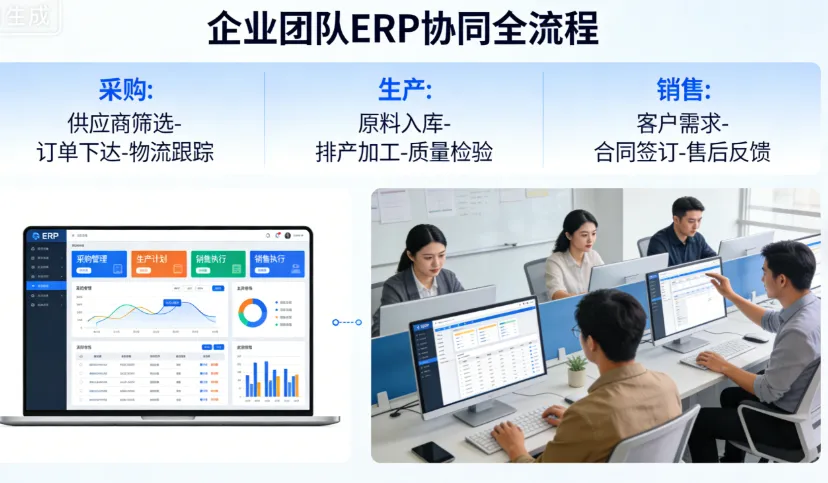
The system can automatically prepare a master production plan and material requirement plan based on sales orders, market demand, inventory levels, and production capacity. It breaks down production tasks into each process, workshop, and position, clarifying key information such as production time, production quantity, and material requirements. During the production process, management personnel can view the production progress, equipment operation status, and material consumption of each process in real time through the system, identify production bottlenecks in a timely manner, and make quick adjustments to ensure smooth and efficient production processes; At the same time, the system can accurately calculate production losses, optimize material ratios, reduce raw material waste, and lower production costs. In addition, the system supports full process tracking of production orders, from order issuance, production execution to finished product warehousing, every link can be traced, ensuring controllable product quality, on-time delivery, and improving customer satisfaction.
Financial and data analysis control is the core role of ERP software in achieving "data-driven decision-making", and it is also the key for enterprises to achieve standardized management and avoid operational risks. In the traditional financial management model, tasks such as financial data entry, voucher preparation, and report generation all require manual completion, resulting in low efficiency and high error rates. Additionally, financial data is disconnected from business data and cannot reflect the actual operational status of the enterprise in a timely manner, making it difficult for managers to make accurate decisions. The financial management module of ERP software achieves a deep integration of finance and business, breaking down the information barriers between finance and business, and enabling real-time synchronization, precision, and controllability of financial data.
The system can automatically interface with various business processes such as procurement, sales, production, and inventory, and generate financial vouchers automatically without manual input, reducing the workload of financial personnel and minimizing data errors; At the same time, the system supports full process financial control of accounts receivable, accounts payable, cost accounting, fixed asset management, etc. It tracks the flow of funds in real time, calculates enterprise profits, helps enterprises accurately grasp their financial situation, and avoids financial risks. More importantly, ERP software has powerful data analysis capabilities, which can integrate the entire process of enterprise business data, generate multi-dimensional reports such as procurement analysis, inventory analysis, production analysis, sales analysis, financial analysis, etc., and present key indicators of enterprise operation in visual charts, allowing managers to clearly grasp the advantages and disadvantages of the enterprise, make scientific and accurate decisions, and avoid operational risks caused by "brainstorming" decisions.
In addition to the core functions mentioned above, ERP software also has supporting functions such as customer management, employee management, and process approval, further improving the enterprise management system. The customer management module can implement functions such as customer information archiving, follow-up records, customer ratings, and payment tracking, helping enterprises maintain high-quality customers and improve customer stickiness; The employee management module can set job permissions, record employee work data, provide objective basis for performance evaluation, and enhance team execution; The process approval module can achieve online approval processes such as procurement applications, expense reimbursements, and order reviews, shorten approval cycles, standardize approval processes, and improve management efficiency.
In summary, the core role of ERP software is not simply a "digital accounting tool", but a "digital hub" that integrates all core resources of the enterprise, standardizes operational processes, achieves efficient collaboration among departments, and supports data-driven decision-making in the enterprise. It can not only solve the pain points of decentralization, inefficiency, and disconnection in traditional enterprise management, optimize resource allocation, reduce operating costs, and improve management efficiency, but also provide strong support for the scale expansion and digital transformation of enterprises. Whether it is a production-oriented enterprise, a trading oriented enterprise, or a service-oriented enterprise, as long as it involves resource integration, process control, and data decision-making, ERP software can play its core value and help enterprises break through management bottlenecks.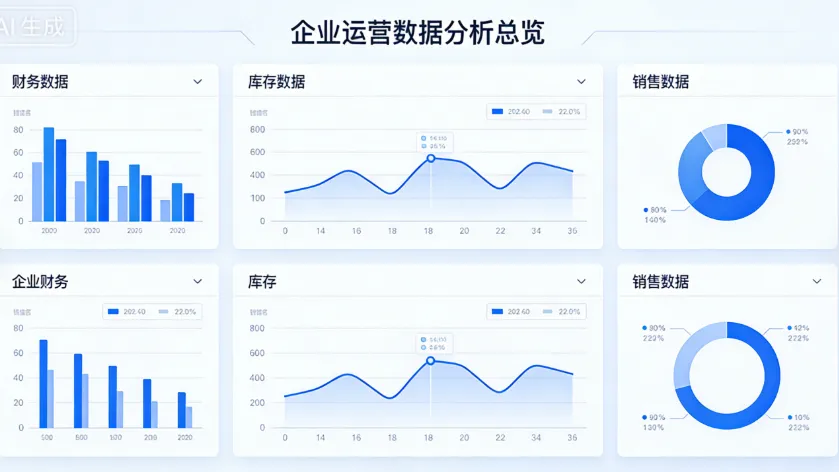
In the current era of accelerated digital transformation, competition among enterprises has gradually shifted to competition in management efficiency and resource integration capabilities, and ERP software, as the core tool for enterprise digital transformation, is becoming increasingly important. The introduction of ERP software by enterprises is not only an upgrade of management mode, but also a reshaping of core competitiveness - through ERP software, enterprises can achieve a transformation from "experience management" to "data management", from "decentralized control" to "centralized collaboration", and from "extensive operation" to "lean operation", firmly establish a foothold in fierce market competition, and achieve sustainable development. In the future, with the continuous iteration of technologies such as artificial intelligence, big data, and the Internet of Things, the functions of ERP software will be further upgraded and optimized, incorporating more intelligent elements to provide enterprises with more comprehensive and personalized resource planning solutions, and continue to empower enterprise development.