
Clothing ERP Logistics Management: Solving Inventory, Cost, and Response Difficulties, Grasping China's Logistics Trends
Triple Challenges of Logistics Management in the Clothing Industry
In the rapidly changing fashion consumer market, the logistics management of clothing enterprises is facing unprecedented complex challenges. The demand fluctuations brought about by seasonal changes, extreme fragmentation of SKUs (stock keeping units), and consumers' increasing expectations for delivery speed collectively constitute a highly dynamic and uncertain operating environment. The traditional logistics management model often leads to three major problems: inventory backlog and shortage, high logistics costs, and slow market response, which seriously restrict the profitability and market competitiveness of clothing enterprises. The ERP system, which integrates advanced logistics management modules, is becoming a key digital tool for clothing enterprises to solve these problems and grasp the new trends of logistics development in China.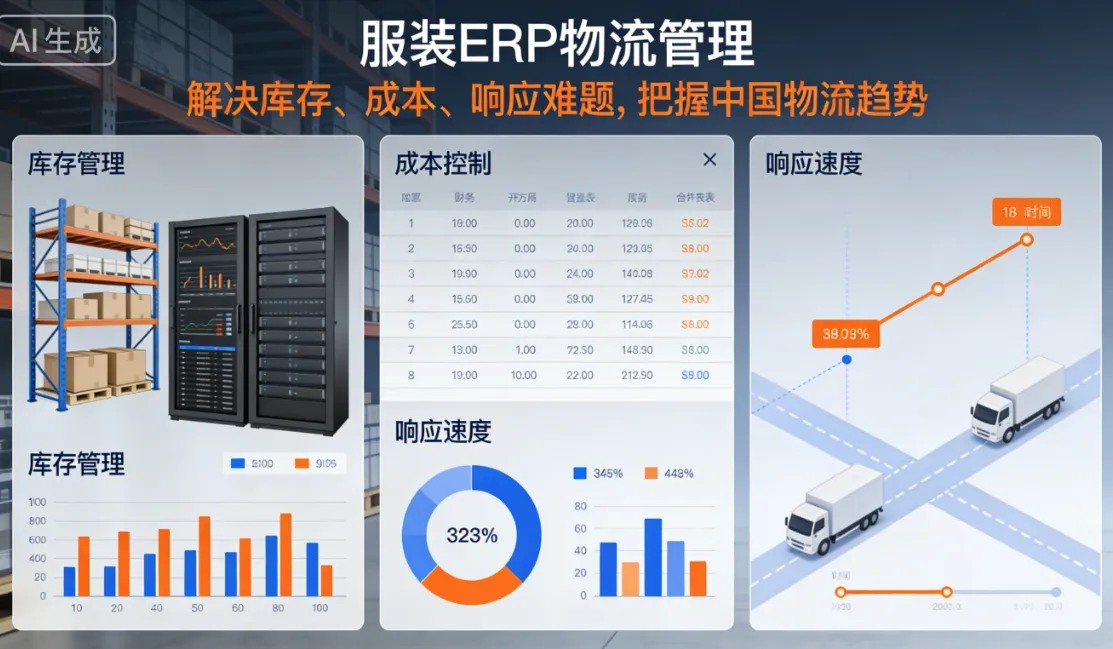
Intelligent Inventory Management: Releasing Capital Efficiency in Dynamic Balance
Inventory is the 'coagulant' of liquidity for clothing enterprises, and improper inventory management can directly lead to low capital efficiency. The traditional model relies on empirical judgment and static safety stock, which makes it difficult to cope with the unique characteristics of the fashion industry, such as "small batches, multiple batches, and short cycles". The ERP system integrates sales data, historical trends, seasonal factors, and promotional plans to construct an intelligent demand forecasting model, achieving dynamic inventory balance.
The system can finely classify massive SKUs and adopt differentiated inventory strategies. For basic and frequently sold items, the system maintains stable inventory based on algorithms; For fashion and seasonal products, a more flexible on-demand replenishment model is adopted. A certain women's clothing brand has increased the inventory turnover rate of its fast response products by 50% through the inventory optimization module of its ERP system, while reducing the proportion of out of season inventory from the industry average of 25% to below 12%. More importantly, the system supports real-time visualization and unified allocation of inventory across all channels. Whether it is online orders, offline stores, or wholesale channels, optimal performance decisions can be made based on real-time inventory data, avoiding overselling or stockouts caused by information silos.
Precise cost control: from extensive management to full chain optimization
The logistics cost accounts for a significant proportion of the total cost of clothing enterprises, but it is often difficult to accurately control due to scattered links. The logistics cost management module of the ERP system achieves visualization and refined control of costs through full chain tracking of procurement logistics, production logistics, sales logistics, and reverse logistics.
In the procurement process, the system integrates supplier delivery on-time rates, transportation costs, and quality data, supporting supplier selection based on total cost rather than solely considering procurement prices. In the production logistics process, the system optimizes the material distribution path and online timing to reduce material accumulation and handling waste near the production line. In the sales logistics process, the system intelligently matches the most economical logistics solution based on order attributes such as timeliness requirements, delivery area, and product value, and automatically completes waybill generation, trajectory tracking, and abnormal warning. A children's clothing company found through ERP system analysis that by consolidating and shipping small batch orders from certain regions, regional distribution costs can be reduced by 18%, while customer delivery time can be increased by only 4 hours, achieving the best balance between cost and service.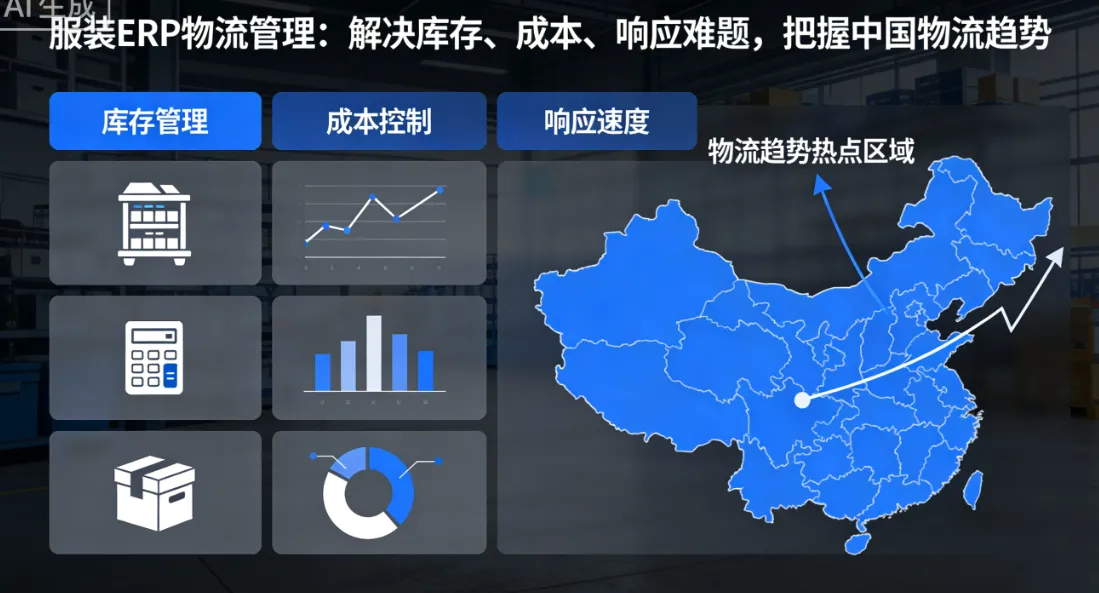
Reverse logistics is a special challenge in the clothing industry, with a much higher return rate than other industries. The ERP system establishes a standardized return processing procedure to achieve rapid acceptance, classification, and relisting of returns, shortening the return processing cycle from an average of 15 days to 5 days. This enables resold goods to be returned to sales channels faster and reduces value loss.
Agile Response System: Building a Market Driven Supply Chain Network
Rapid response capability has become a key competitive advantage in the fashion industry. The ERP system integrates the complete information flow from terminal consumption data to the upstream of the supply chain, building a market driven rapid response system. When a certain style suddenly sells well in a specific area, the system can capture this signal in real time and quickly simulate the impact on raw materials, production capacity, and logistics resources, generating replenishment suggestions or production adjustment plans.
The system supports multi-layer collaboration in the supply chain, allowing brand owners to share demand forecasting, production planning, and inventory information with fabric suppliers, garment factories, and logistics service providers on the same platform, transforming the traditional serial supply chain into a parallel collaborative network. A fast fashion brand has shortened the cycle from design to launch of new products from the industry average of 6-8 weeks to 3-4 weeks through an ERP collaborative platform, significantly improving its response speed to fashion trends. During promotional activities, the system can dynamically adjust the inventory distribution and delivery priority of each warehouse based on real-time sales data, ensuring that hot areas are not out of stock and maximizing promotional effectiveness.
Grasping the Trends of Logistics in China: Digitization, Greening, and Supply Chain Resilience
The logistics industry in China is undergoing profound changes, presenting three major trends of digitization, greenization, and resilience. Clothing ERP systems need to closely adapt to these trends and continue to evolve.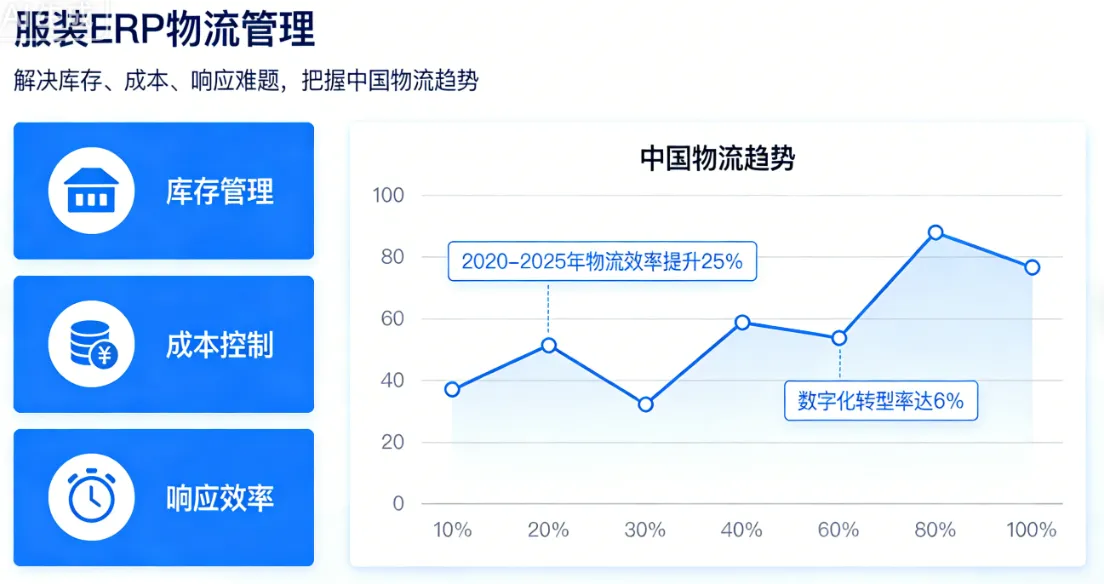
The trend of digitization is reflected in the real-time visualization and intelligent decision-making of the entire logistics process. Modern ERP systems are deeply integrated with IoT technology, achieving full tracking of goods from factories to consumers through RFID, sensors, and GPS devices. A high-end clothing brand has integrated an ERP system with the Internet of Things, allowing customers to view the precise location and estimated delivery time of orders in real time, reducing customer service inquiries by 40% and improving customer experience.
The trend towards greenization requires logistics management to consider environmental costs. The path optimization algorithm of ERP system not only calculates the shortest path, but also comprehensively considers carbon emissions, traffic congestion and energy consumption factors, supporting green logistics decision-making. Some advanced systems are already able to calculate the carbon footprint of different logistics solutions, helping companies achieve sustainable development goals.
Supply chain resilience has become a focus of attention in the post pandemic era. The ERP system enhances the ability of clothing enterprises to respond to emergencies through multi-source supply, multi warehouse layout, and dynamic routing functions. The system can simulate the impact of different interruption scenarios (such as regional lockdown, port congestion, extreme weather) on the supply chain and generate response plans. A national clothing enterprise has established a three-level flexible supply chain network of "regional warehouse+city warehouse+store" through the network optimization function of the ERP system. Even when logistics is restricted in some areas, it can still ensure that more than 80% of orders are fulfilled normally.
Integration and Upgrade: From Tools to Strategic Empowerment
The value of the clothing ERP logistics management module has surpassed simple operational tools and risen to become a strategic empowerment platform for enterprises. It helps clothing companies build unique operational advantages in fierce market competition through data-driven inventory optimization, full chain cost control, agile response mechanism construction, and close grasp of logistics trends in China.
In the future, with the further maturity of artificial intelligence, big data, and blockchain technology, clothing ERP logistics management systems will become more intelligent. AI algorithms will more accurately predict micro demand and automatically execute replenishment decisions; Blockchain technology will enhance supply chain transparency and strengthen consumer trust; Digital twin technology will allow enterprises to simulate and optimize the entire supply chain network in a virtual environment.
For clothing companies, investing in and utilizing ERP logistics management systems is no longer a technological option, but a strategic necessity to maintain competitiveness in the rapidly changing fashion market and logistics environment. Only those enterprises that can transform logistics from cost centers to efficiency driven and experience creation centers can continue to win the favor of consumers in fierce market competition and achieve sustainable high-quality development.