
What are the main principles of ERP production planning?
Management Challenges and Digital Transformation in the Clothing Industry
In the context of rapid changes in fashion trends and increasingly diverse consumer demands, clothing companies are facing unprecedented operational challenges. Seasonal fluctuations, extreme SKU fragmentation, slow supply chain response, inventory turnover pressure, and cost control challenges are intertwined, forming a highly complex management matrix. The traditional management model relies on empirical judgment and scattered information systems, which are no longer able to support enterprises in maintaining agility and efficiency in fierce market competition. As the core carrier of digital transformation in the industry, clothing ERP management software is not only a set of technical tools, but also a strategic engine that drives enterprises to upgrade from traditional operations to lean and intelligent management, fundamentally reshaping the value creation mode of clothing enterprises.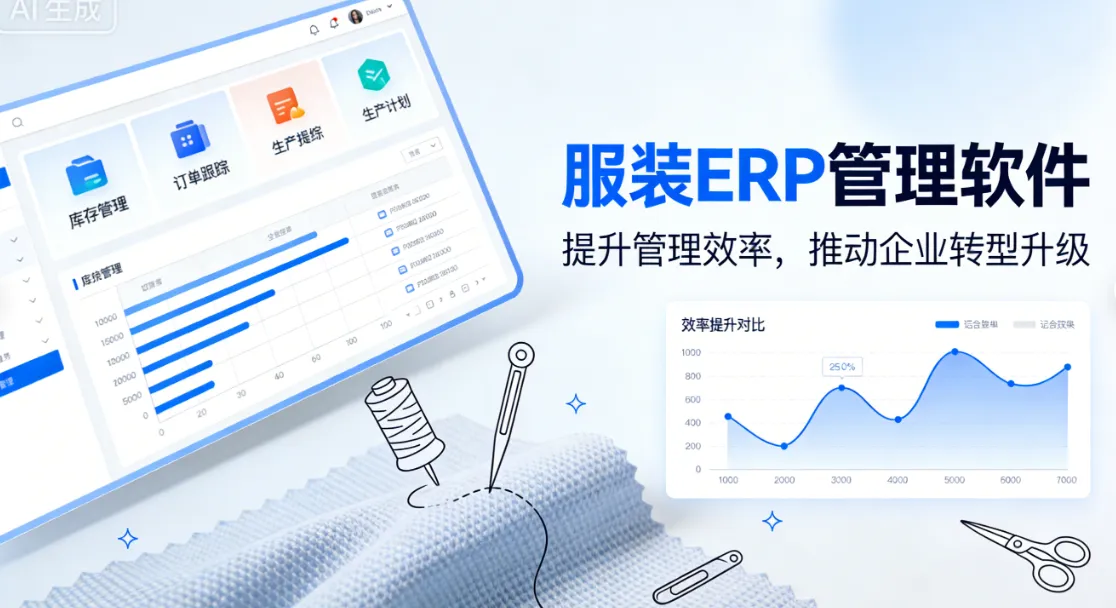
Full chain business collaboration: breaking information silos and improving operational efficiency
The operation of clothing enterprises involves many links such as design, procurement, production, warehousing, sales, and finance. Under the traditional model, these links often form independent information islands, resulting in low collaborative efficiency and slow response. The clothing ERP management software achieves full chain business collaboration and data connectivity from fabric procurement to ready to wear sales by building an integrated digital platform.
In the design and production process, the system supports standardized input of design drafts, fabric information, process sheets, and other data, and automatically generates material lists and cost estimates. After the design is finalized, relevant information can seamlessly flow to the procurement module. The system provides intelligent procurement suggestions based on historical data and supplier performance, and automatically generates purchase orders. A certain women's clothing brand has shortened the design to first batch production cycle by 40% through an ERP system, while reducing material waste rate by 25%. During the production process, the system tracks order progress, material consumption, and quality control data in real-time. Managers can understand the load status and delivery risks of each production line at any time and adjust resource allocation in a timely manner.
In terms of supply chain collaboration, the ERP system connects brand owners, material suppliers, garment factories, and logistics service providers on the same platform, sharing demand forecasting, inventory levels, and production planning information. This transparent collaborative mechanism significantly reduces the bullwhip effect caused by information asymmetry and improves the overall response speed of the supply chain. A fast fashion company has shortened the average response time of its supply chain from the industry average of 6-8 weeks to 3-4 weeks through this system, achieving rapid capture and conversion of market trends.
Intelligent Inventory and Demand Management: The Dynamic Art of Balancing Supply and Demand
Inventory management is the core pain point of clothing enterprises, and there is a common contradiction of "out of stock of best-selling products and backlog of unsold products". The clothing ERP management software integrates sales data, historical trends, seasonal factors, and market intelligence to construct an intelligent demand forecasting model, providing data support for inventory decision-making.
The system can implement differentiated inventory strategies for products of different categories and lifecycles. For basic models, the system maintains a stable safety stock based on algorithms; For fashion styles, a more agile "small batch, fast response" replenishment model is adopted. Real time visualization and unified allocation of omnichannel inventory are key capabilities. The system can automatically allocate inventory sources for online orders, offline store restocking, and wholesale orders, achieving maximum inventory utilization. After a certain casual clothing brand launched ERP, the overall inventory turnover rate increased by 35%, and the proportion of out of season inventory decreased from 30% to below 15%, releasing a large amount of funds.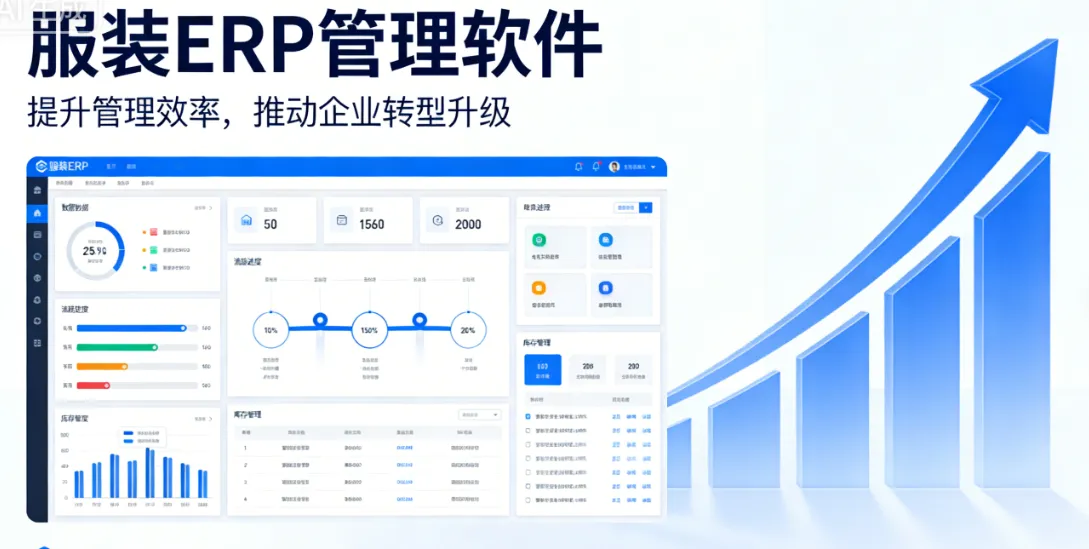
The linkage between accurate demand forecasting and production planning further optimizes resource allocation. The system can simulate the impact of future demand changes on production capacity and materials based on real-time sales dynamics, assisting managers in developing more accurate production and procurement plans. During promotional activities, the system can dynamically adjust the inventory distribution and logistics priority of each warehouse to ensure supply in hot areas and maximize sales opportunities.
Refined cost control and integrated financial operations
The ability to control costs directly determines the profitability level of clothing enterprises. ERP software achieves a transition from extensive management to refined control through cost tracking and accounting throughout the entire product lifecycle. From the procurement of materials and accessories, production and processing, to warehousing and logistics, sales and marketing, the costs of each link are recorded, collected and analyzed in real time.
The system supports cost accounting based on multiple dimensions such as style, order, batch, etc., accurately calculating the true cost composition of each piece of clothing. This not only provides a basis for pricing strategies, but also helps identify cost anomalies and optimization opportunities. For example, by analyzing the price fluctuations, quality performance, and delivery stability of different fabric suppliers, companies can optimize their procurement mix; By tracking the work efficiency and defect rate of the production line, targeted improvements can be made to the process. A medium-sized clothing enterprise used the cost analysis module of ERP to discover the problem of high labor costs caused by complex processes in a certain type of product. Through process optimization, the cost of the product was reduced by 18%.
Financial business integration is the core advantage of ERP. Every transaction, such as sales outbound and material requisition, will automatically trigger the generation of corresponding financial vouchers, ensuring that financial data reflects the business situation in real-time and accurately. This greatly simplifies the month end closing process, improves the timeliness and reliability of financial reports, and provides management with the real data foundation needed for decision-making.
Data driven decision-making and continuous improvement
The clothing ERP system is not only a platform for executing business processes, but also a core sedimentation pool and value mining center for enterprise data assets. The massive business data accumulated by the system can be transformed into multidimensional management insights through built-in business intelligence tools.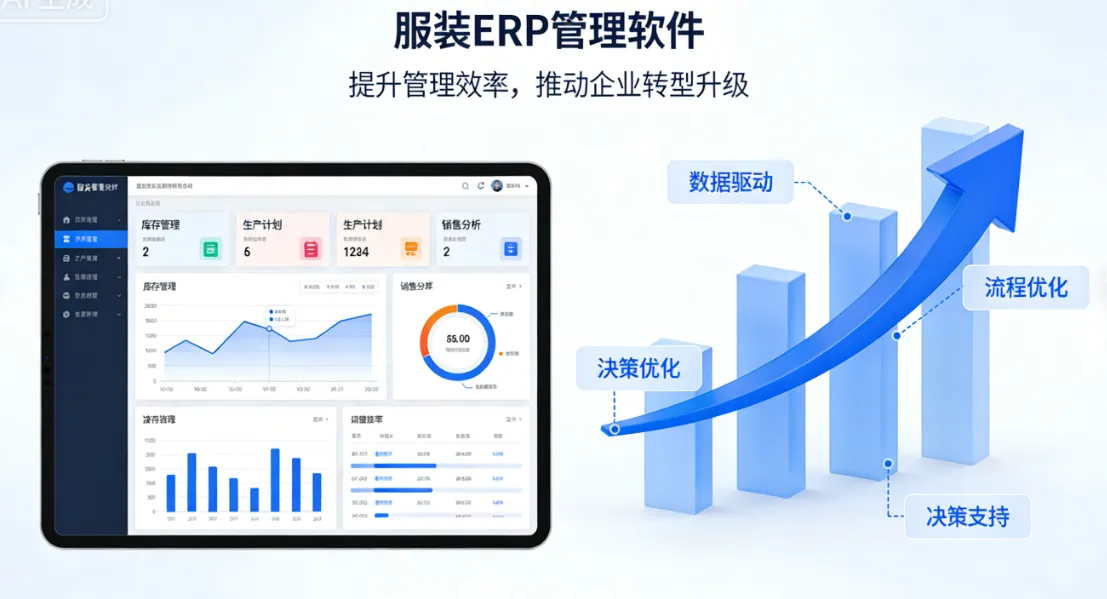
Managers can grasp key operational indicators in real time through visual dashboards, including sales dynamics of various channels, inventory health, production plan achievement rate, supplier performance, product profit margin, etc. Deep data analysis can reveal hidden business patterns, such as identifying product preferences of different customer groups, evaluating the true return on investment of marketing activities, and analyzing the root causes of high return rates. A certain brand found through analyzing sales data that the online return rate for a certain type of product is much higher than offline. After research, it was found that this was due to inconsistent size labeling standards. After timely adjustment, the return rate decreased by 50%.
These data insights provide direction for enterprise strategic adjustments and continuous improvement. The sales forecasting model based on historical data is becoming increasingly accurate, reducing the blindness of stocking up; The quantitative evaluation of the performance of each link in the supply chain has promoted collaborative optimization among partners; A clear understanding of product costs and profits guides the adjustment of product portfolios and pricing strategies. The data-driven decision-making culture is helping companies transition from relying on experience to relying on data.
Promoting enterprise transformation and upgrading: from efficiency improvement to model innovation
The profound value of clothing ERP management software lies not only in its role as a tool to improve operational efficiency, but also as a catalyst for promoting overall transformation and upgrading of enterprises. It helps enterprises solidify their internal management foundation, enhance organizational collaboration capabilities, and build an agile operational system to respond to market changes through standardized and digitized processes.
Furthermore, the data assets and process integration capabilities accumulated by ERP systems provide possibilities for business model innovation. For example, accurate analysis based on customer purchase data can promote the development of personalized recommendations and customized services; The transparency and collaborative efficiency improvement of the supply chain support the deepening of flexible manufacturing and fast response modes; The unified management of omnichannel inventory is the technical prerequisite for implementing new retail scenarios such as online ordering and in store shipping. A traditional clothing company successfully launched a subscription service of "try on before purchase" by integrating front-end and back-end data through an ERP system, creating a new growth curve.
In today's industry where digital transformation has become a consensus, clothing ERP management software has changed from an "optional" to a "mandatory" option. It helps enterprises build a new competitive advantage in the rapidly changing market, with data as the core, processes as the link, and collaboration as the advantage. Investing in and making good use of this system is not only necessary to address current management pain points, but also a strategic layout for enterprises to occupy a favorable position in the future fashion industry landscape. When management efficiency and data intelligence are deeply integrated, the transformation and upgrading path of clothing enterprises will be more solid and smooth.