As the clothing industry entersSmall order quick response, global e-commerce, flexible intelligent manufacturing, digital lean management and controlIn a new stage of development, the pace of digital transformation in the clothing industry will continue to accelerate by 2026, and the traditional extensive management model will gradually be replaced by intelligent, cloud based, and integrated ERP management systems. The pain points of current clothing enterprise management are becoming increasingly prominent: complex management of multi-color and multi code SKUs, difficult cost control of materials and accessories, chaotic workshop production scheduling, lack of online and offline inventory, peak pressure on live streaming orders, and low efficiency of supply chain collaboration. A professional clothing ERP system that adapts to industry characteristics has become a core tool for enterprises to reduce costs, increase efficiency, and seize market opportunities.
Looking at the domestic clothing ERP market in 2026, the industry pattern is already clear: international high-end ERP deeply cultivates large groups and multinational clothing enterprises, domestic top brand ERP is based on localization advantages, covering integrated industry and trade, brand chain enterprises, vertically segmented ERP focuses on e-commerce live streaming, fast fashion, clothing outsourcing and other segmented tracks, while lightweight and simple ERP comprehensively sinks into small and micro factories, physical stalls and start-up clothing brands. This article reviews the top ten mainstream clothing ERP systems in 2026 and provides comprehensive practical selection strategies based on industry development trends to assist various clothing enterprises in accurately matching and adapting their systems.
1、 New Trends in Digital Development of the Clothing Industry in 2026
By 2026, clothing ERP will no longer be limited to basic functions such as inventory management, financial reconciliation, and order management, and will comprehensively move towardsCloud native SaaS architecture, AI intelligent empowerment, omnichannel and full domain connectivity, MES workshop integration, RFID intelligent traceability, private domain membership operationUpgrade in six major directions. Small order fast response has become the mainstream mode of clothing manufacturing, and flexible production scheduling, rapid new product updates, and short cycle delivery have become essential capabilities of the system; The outbreak of orders in Tiktok, Kwai, Xiaohongshu and other live e-commerce channels forced ERP to achieve automatic aggregation of orders on multiple platforms, intelligent document review, and automatic warehouse based delivery; At the same time, the integration of business and finance, refined cost accounting, and upstream and downstream coordination of the supply chain have become the core demands for digital upgrading of medium and large clothing enterprises. Lightweight, easy to use, and low-cost deployment have become the primary considerations for small and medium-sized clothing enterprises in their selection.
2、 Comprehensive analysis of ERP systems for the top ten mainstream clothing industries in 2026
1. SAP S/4HANA Fashion
As a top tier ERP system in the international apparel industry, with its ability to manage the entire industry chain in a closed-loop manner, it firmly holds the top spot in the high-end market. The system integrates the entire process of clothing design and development, fabric procurement, intelligent production, global distribution, terminal retail, and group finance. It is equipped with AI demand forecasting, digital twin production scheduling, and intelligent optimization of fabric loss, which will be upgraded in 2026. It supports multi currency, multi language, cross national, and multi organizational operations, and deeply integrates PLM product lifecycle management and intelligent warehousing system. Suitable for large listed clothing groups with annual revenue of over 800 million yuan, multinational fast fashion brands, and leading foreign trade clothing enterprises. However, the disadvantages are high deployment costs, implementation cycles of up to six months to a year, and difficulty in operation and maintenance, making it difficult for small and medium-sized enterprises to adapt.
2. Infor M3 Fashion
Specializing in collaborative management of high-end clothing supply chain, it is the preferred digital system for high-end fashion and sportswear brands. The system focuses on supply chain management in the clothing industry, with mature market demand calculation, intelligent supplier matching, multi factory collaborative production, and high-quality garment quality traceability capabilities. By 2026, cloud architecture optimization will be completed, and a green supply chain traceability module will be added to meet the branding and quality management needs of high-end clothing brands. The overall pricing is relatively high, with few localized service outlets in China, making it more suitable for mid to large high-end clothing groups. The cost-effectiveness of ordinary production enterprises is relatively low.
3. Oracle NetSuite Apparel Edition
A cross-border clothing benchmark ERP with native cloud architecture, focusing on integrated operation of all channels. The system integrates the entire business chain of online e-commerce, offline stores, wholesale distribution, and cross-border trade, achieving dynamic cost accounting, global inventory synchronization, intelligent replenishment, and cross-border financial and tax compliance management. In 2026, the focus will be on strengthening the automation process of live streaming e-commerce order docking and return and exchange. Adapting to mid to high end clothing brands and cross-border clothing e-commerce enterprises, the advantage lies in flexible cloud expansion, while the disadvantage lies in the weak management function of the clothing production end, and the need for additional customized development of complex size and color code matrices.
4. UFIDA U8+Clothing Industry Edition&Changjietong T+Cloud
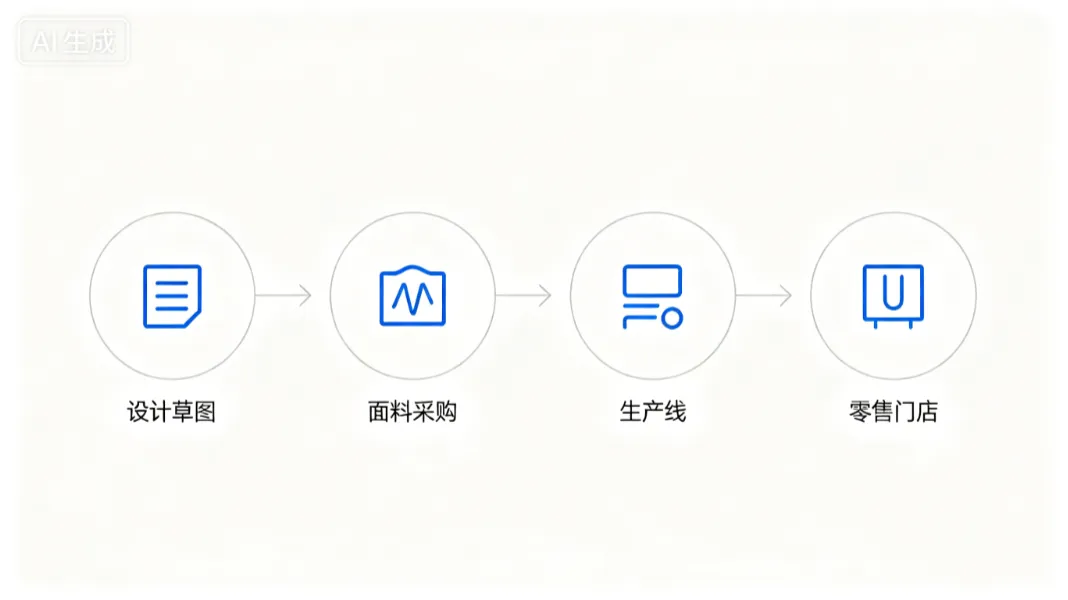
The benchmark ERP in the field of localized clothing manufacturing in China has been deeply involved in the integration of clothing industry and trade for many years, and is in line with the business model of domestic clothing factories. The system has built-in core functions such as exclusive BOM formula for clothing, size and color code matrix, pattern room sampling management, cutting material optimization, outsourcing control, and workshop process traceability. In 2026, AI intelligent scheduling, mobile workshop management, and RFID material traceability functions will be added, perfectly adapting to the domestic financial and tax accounting system. Widely used in medium and large clothing processing factories, clothing OEM factories, and self owned production line industrial and trade enterprises, the system has strong stability and mature implementation, only slightly inferior to cloud based lightweight experience, and traditional operating interfaces require simple training to get started.
5. Kingdee Cloud and Starry Sky Clothing Solution
The preferred choice for cloud integrated growth clothing brands is ERP, which balances practicality and cost-effectiveness. Relying on the advantages of flexible deployment in the cloud, it deeply adapts to the fast fashion clothing business model, supports flexible production of small orders, unified management of omnichannel orders, intelligent allocation of stores, and refined operation of private domain members. It can seamlessly connect with major mainstream e-commerce and live streaming platforms, and upgrade practical functions such as fast processing of large promotion orders and intelligent inventory warning by 2026. Suitable for e-commerce transformation entities, fast fashion original brands, and multi store chain clothing enterprises, with strong comprehensive adaptability, it is the mainstream choice for enterprises with a revenue scale of 30 million to 300 million.
6. Yishen Clothing ERP
A vertically specialized ERP system with 20 years of experience in the fashion apparel industry, focusing on the comprehensive operation and management of apparel chain brands. The system focuses on core businesses such as clothing product planning, global distribution, offline store retail, membership global operation, and intelligent replenishment. It has accumulated more than tens of thousands of clothing brand landing cases, and will increase AI product data analysis, store intelligent shopping guidance, and online and offline traffic interconnection functions by 2026. The main brand clothing chain operation has complete retail functions, but relatively weak production and manufacturing depth control capabilities.
7. Lijing Software
The leading ERP system for domestic fast fashion clothing chains focuses on rapid new product launches and efficient channel circulation. The system is adapted to the fast-paced management of fast fashion clothing, achieving rapid filing of new products, real-time sharing of national store inventory, intelligent product allocation, precise member segmentation marketing, fully connecting live e-commerce and physical store data links, and equipped with RFID full chain clothing traceability function, which is highly favored by trendy clothing chain brands. The advantage lies in the mature operation of retail channels, but the lack of adaptability to pure clothing production and processing scenarios.
8. Jushuitan Clothing ERP
The leading ERP system in clothing live streaming e-commerce and global e-commerce, with order processing capability as its core advantage. The system can aggregate e-commerce orders across all platforms with just one click, enabling automatic order review, intelligent splitting and merging of orders, and batch shipment. It can handle peak orders of up to 100000 orders in a single day, and real-time synchronization of inventory data to prevent overselling and misdelivery. By 2026, it will improve live streaming real-time order synchronization and cross-border e-commerce account settlement functions. Focusing on e-commerce backend performance management, with weak manufacturing functions such as production scheduling and fabric procurement, it is more suitable for pure e-commerce clothing merchants and live streaming clothing enterprises.
9. Yunbiao Clothing ERP
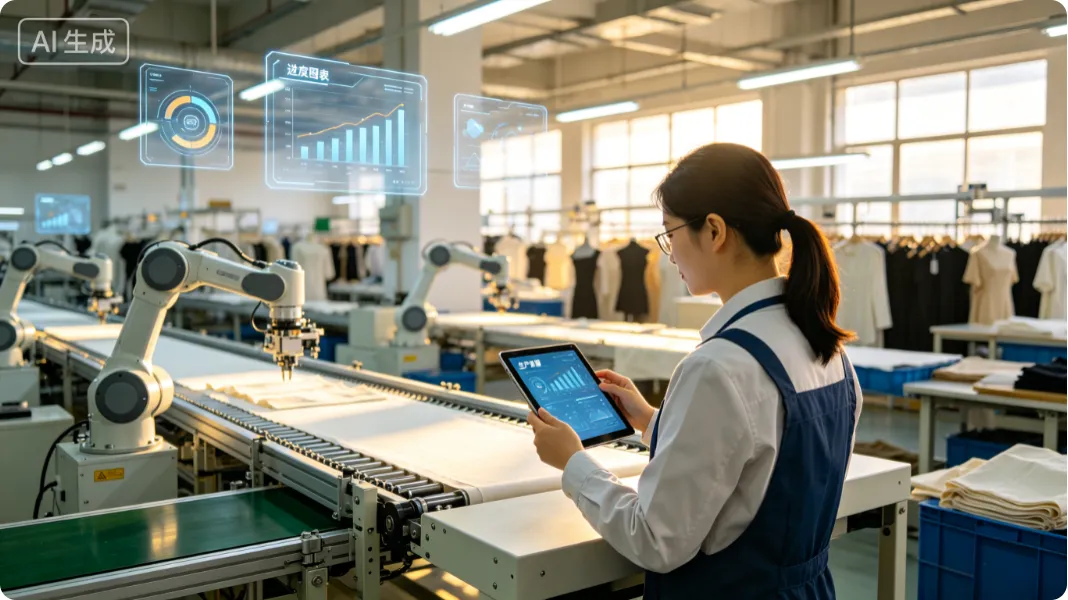
Code free customized clothing ERP, the preferred system for fast response of small orders in small and medium-sized clothing factories. Without the need for professional code development, enterprises can freely build management processes based on their own business, covering the entire process of clothing sampling, order acceptance, fabric control, flexible scheduling, inventory linkage production, etc. Lightweight deployment and fast implementation speed. In 2026, a one click application function for industry-specific templates will be added. The limitation of adapting to small and medium-sized clothing processing factories, customized clothing enterprises, and small batch multi style OEM factories lies in the limited ability of large-scale group supply chain coordination.
10. Housekeeper's Clothing ERP
Small and micro clothing market with high cost-effectiveness and simple ERP, focusing on low-cost and fast implementation. The system is streamlined and practical, covering basic inventory management, physical store POS cash register, basic member management, simple inventory counting and other functions. It is easy to operate and can be proficiently used by ordinary merchants in one day. By 2026, the mobile management and WeChat mini program integration functions will be optimized. Specially designed for clothing stalls, couple's clothing stores, and start-up small clothing wholesalers, with streamlined functions, it cannot meet the mid to high end business needs such as complex production and refined cost accounting.
3、 Six core selection criteria for ERP in clothing enterprises in 2026
1. Adhere to industry-specific adaptability and abandon generic systems
The clothing industry has complex SKUs, diverse sizes and color specifications, and special production processes, which are the core characteristics that distinguish it from ordinary manufacturing industries. Therefore, the selection should be based on accuracyClothing Exclusive Customization ERPIt must be equipped with essential industry functions such as multi-color and multi code matrix management, fabric and accessory grading BOM, pattern room sampling management, garment cutting accounting, outsourcing processing control, etc. Universal ERP systems are prone to problems such as process inconsistencies and data confusion.
2. Prioritize the layout of cloud native architecture and adapt to the trend of digitalization
In 2026, SaaS cloud ERP will become mainstream in the market, with priority given to native cloud architecture systems that support remote login from multiple devices, automatic cloud backup of data, free online system updates, and unrestricted office locations. This will eliminate outdated local deployment systems, reduce server setup and daily operation costs, and ensure the security and stability of enterprise business data.
3. Emphasize the practical functions of AI intelligence and reject gimmicky configurations
Avoid selecting pseudo intelligent systems that only stack concepts, and prioritize those withIntelligent production scheduling, sales demand forecasting, intelligent control of fabric loss, and inventory backlog warningBy implementing practical AI functions in ERP, we can truly streamline manpower and reduce costs, rather than just optimizing surface functions such as data reports.
4. Match your own business model and distinguish between production and retail tracks
Pure clothing production factories focus on inspecting workshop scheduling, process control, material control, and production cost accounting functions; Brand chain enterprises focus on store distribution, product allocation, and membership operations; Live streaming e-commerce merchants prioritize order processing speed, multi platform integration, and collaborative warehousing and shipping capabilities, and accurately screen based on their main business to avoid functional redundancy and cost waste.
5. Reasonably control overall investment costs and plan long-term budgets
The ERP cost of clothing enterprises includes software usage fees, project implementation fees, personnel training fees, and post operation and maintenance service fees. In 2026, the mainstream model will be based on annual subscription. The annual budget for small and micro enterprises should be controlled within 50000 yuan, for small and medium-sized industrial and trade enterprises it should be 50000 to 200000 yuan, for medium and large brand enterprises it should be 200000 to 800000 yuan, and for large group enterprises it should be customized with high-end systems according to their needs. We must resolutely avoid bad service providers who attract customers at low prices and increase prices in the later stage.
6. Verify local landing services and practical cases
No matter how perfect the system functions are, it is difficult to realize its value without adequate landing services. When selecting a service provider, it is necessary to verify the local implementation team, after-sales response time, and successful landing cases of the same scale in the industry. Priority should be given to selecting a service provider with a large number of practical cases in the clothing industry, who can provide on-site implementation and long-term technical guidance to ensure the smooth launch and stable operation of the system.
4、 Accurate selection plan based on scale and status
- Large clothing conglomerates and multinational clothing brandsSAP S/4HANA Fashion is the preferred choice, while Infor M3 and Oracle NetSuite are alternative options, with a focus on global coordination and integrated management of the entire industry chain.
- Medium to large clothing factories, integrated industry and trade, clothing OEM factoriesPrioritize the use of YouU8+and Yunbiao ERP, balancing production control and business finance integration, and adapting to the domestic factory business model.
- Growth oriented original clothing brand, fast fashion chain brandWe mainly promote Kingdee Cloud, Starry Sky, Yishen Software, and Lijing Software to meet the needs of brand expansion and omnichannel layout development.
- Live streaming e-commerce, global online clothing merchantsThe preferred choice is Jushuitan ERP, which focuses on order fulfillment and efficient e-commerce operations, making it easy to cope with the pressure of large promotional orders.
- Small and medium-sized processing plants, customized clothing enterprisesChoose Yunbiao ERP, flexibly customize processes, and adapt to the flexible business model of small order quick response.
- Physical clothing stalls, offline stores, and start-up small and micro merchantsUsing Housekeeper Clothing ERP, low-cost and fast online to meet basic daily business management needs.
V. Conclusion
In 2026, the digital competition in the clothing industry will become increasingly fierce. ERP systems are no longer optional configurations for enterprises, but essential digital tools for stable operations, cost reduction and efficiency improvement, and market expansion. In the selection process, clothing companies do not need to blindly pursue high-end brand systems, nor should they blindly seek low prices to choose simple low-end systems. They should base themselves on their own business scale, main business model, and future development plan, and comprehensively consider the four core dimensions of industry adaptability, cloud performance, intelligent functions, and landing services.
Only by choosing a professional clothing ERP system that meets one's own development needs, breaking down data barriers in the entire process of design, procurement, production, warehousing, sales, and finance, achieving lean production, transparent inventory, integrated channels, and intelligent management, can one stand firm in the fierce competition of the clothing market, smoothly complete digital transformation and upgrading, and achieve long-term stable development of the enterprise.