Shoe and Clothing ERP Procurement Module: Core Support for Process, Value, and Enterprise Supply Chain
In the current fast-paced iteration, complex SKUs, and tight supply chain rhythm of the footwear and apparel industry, the procurement process serves as a key hub connecting front-end market demand, mid-range production and manufacturing, and back-end financial settlement. Its management efficiency directly determines the company's cost control, delivery capability, and market competitiveness. Under the traditional manual procurement model, pain points such as blind procurement, color code confusion, cost control, and discrepancies between accounts and reality occur frequently. However, the emergence of the shoe and clothing ERP procurement module, through standardized processes, intelligent driving, and full chain integration, has completely broken the bottleneck of traditional procurement and become an essential core tool for shoe and clothing enterprises to scale up and operate in a standardized manner. This article will comprehensively analyze the significance and practical logic of the procurement module in the footwear and apparel industry from three dimensions: core values, standardized processes, and implementation logic.
As a typical fast-moving consumer goods manufacturing industry, the footwear and apparel industry has distinct industry characteristics in procurement management - single SKU combinations of multiple colors and sizes, complex categories of fabrics and accessories, tight production lead times, and changing market demand. This requires the procurement process to achieve "precision, efficiency, and traceability". The core value of the ERP procurement module is to fit the characteristics of this industry, solve many pain points of traditional procurement, and lay a solid foundation for enterprise supply chain.
From the perspective of core necessity, the value of the shoe and clothing ERP procurement module is reflected in five core dimensions that run through the entire procurement process of the enterprise. Firstly, it accurately adapts to the "color code level" management needs of the footwear and apparel industry, completely solving the problem of chaotic color code statistics in traditional procurement. Shoe and clothing procurement is not a single material procurement, but a combination procurement based on "style number+color+size". Manual statistics can easily lead to situations where a certain color code material is overstocked, a certain color code material is understocked, and out of stock. However, the ERP procurement module can decompose requirements based on color codes, generate purchase orders, and complete warehousing, ensuring accurate matching of material supply and demand from the root. Secondly, connect the entire supply chain, achieve "on-demand procurement", and eliminate blind procurement and material interruption risks. The procurement demand is not generated out of thin air, but is automatically generated through MRP (Material Requirements Planning) calculation, combined with sales orders, production plans, existing inventory, safety stock, and in transit materials, to ensure the "material waiting work" in the production process. This not only avoids order delays caused by material shortages, but also prevents excessive procurement from causing fabric and accessory backlog (shoe and clothing fabrics are prone to obsolescence and wear, and backlog is a direct cost loss).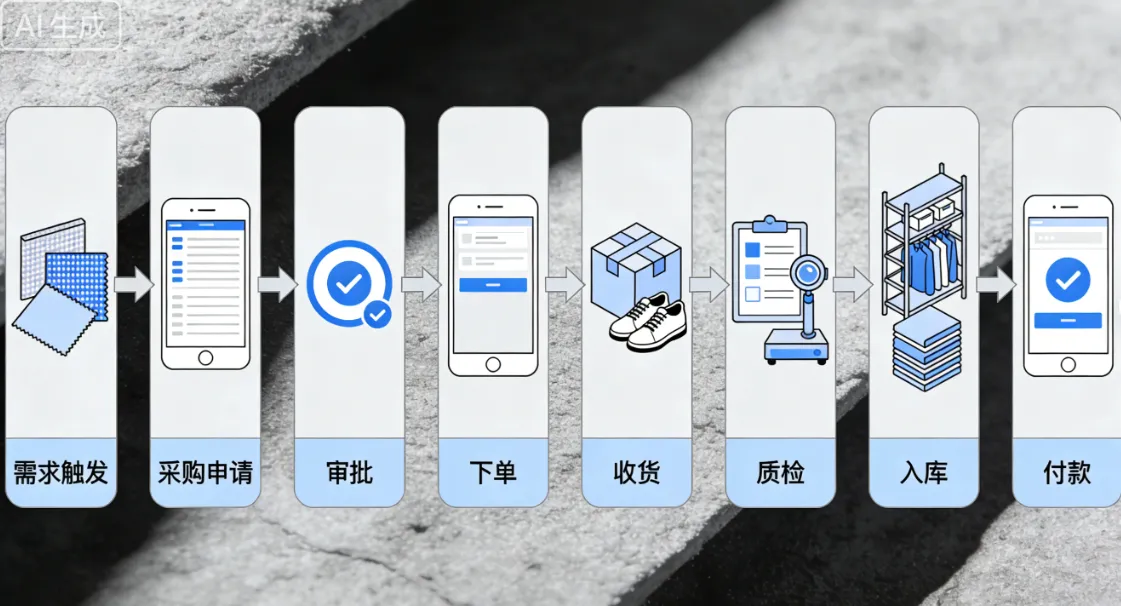
Thirdly, standardize the procurement process, control procurement risks, and achieve full traceability throughout the entire process. The ERP procurement module will digitize the entire process of "procurement application → approval → order placement → receipt → quality inspection → warehousing → settlement", replacing traditional offline paper and verbal operations. Through multi-level approval authority control (such as setting different approval levels according to the purchase amount), procurement fraud can be prevented; Every step of the operation leaves a trace, and any problems can be quickly traced back, eliminating the non-standard behavior of "no order procurement, receiving goods before placing orders" and ensuring procurement compliance. Fourthly, refine cost control and reduce comprehensive procurement costs for enterprises. Module unified management of supplier historical quotations and agreement prices, automatically bringing out the best price when placing an order, to avoid high prices caused by individual bargaining; Simultaneously automatically calculate the landed cost (including material price, freight, taxes, etc.), accurately calculate the procurement cost of single/single color/single code products, and provide data support for product pricing and cost analysis; In addition, through an automatic supplier scoring mechanism, the supplier pool is optimized based on dimensions such as delivery time, quality, and price, reducing the quality and delivery costs of subsequent procurement. Fifth, achieve the integration of business and finance, ensure the synchronization of accounts and reality, and avoid financial chaos. In traditional procurement, there is a disconnect between warehouse receipt, financial accounting, and supplier reconciliation, which can easily lead to problems such as "physical goods have been received but not accounted for by finance" and "invoices do not match the received amount". However, the ERP procurement module automatically generates estimated vouchers and accounts payable through "three order matching (purchase order+receipt+invoice)", achieving real-time synchronization between financial and physical accounts, greatly improving the efficiency of reconciliation and settlement, and eliminating data disconnection.
In addition to its core values, the standardized overall process of the shoe and clothing ERP procurement module is also the key to its implementation and effectiveness. The entire process follows the logic of "demand driven → process control → execution tracking → business and finance closed loop", centered around the "color code level" management design of shoes and clothing, forming an 8-step standardized closed loop that can be flexibly simplified according to the scale of the enterprise, and the core links cannot be missing.
The starting point of the process is requirement triggering, with automatic triggering as the main method and manual triggering as a supplement. Automatically triggering the generation of color code level material procurement requirements through MRP calculations. The calculation logic is: Net demand (a certain color code material)=Gross demand (production/order demand) - Existing inventory - In transit materials+Safety stock. The system breaks down the requirements by item number, BOM (bill of materials), color code, and groups them by supplier; Manual triggering refers to situations such as temporary production and material loss, which are manually reported by relevant departments, specifying key information such as color code, quantity, and delivery time. The second step is the procurement request. The purchaser summarizes various procurement requirements, generates a procurement request form, fills in suggested suppliers, prices, and delivery dates, completes the initial review of the requirements, verifies the rationality of the requirements and the completeness of the information. The third step is the approval process, where the system automatically processes according to preset rules such as purchase amount and material type. The approver can view data such as inventory, in transit quantity, and historical purchase prices to assist in decision-making. Once approved, the process moves on to the next stage, and if rejected, it will be returned for modification.
The fourth step is to generate and issue purchase orders. After approval, the system will convert the purchase request form into a purchase order with one click, automatically filling in supplier information, material color code details, unit price, delivery time, etc., and marking them by color code line to avoid supplier shipping errors; After order confirmation, it can be sent electronically through email, supplier portal, and other methods. The supplier's online confirmation will take effect, and any modifications need to go through the change process and leave a trace. The fifth step is order execution and tracking. After the supplier ships the goods, the logistics information is entered, and the system monitors the delivery time in real time, reminds in advance of the arrival of goods and materials, automatically alerts for overdue, and supports real-time recording of partial shipments and partial arrivals. The sixth step is to receive incoming materials. The warehouse administrator checks the color code and quantity of the purchase order and delivery materials by scanning the code. If they match, a receipt will be generated and marked as "awaiting quality inspection". If they do not match, they will be rejected or temporarily accepted, and the supplier will be promptly contacted to resolve any abnormalities.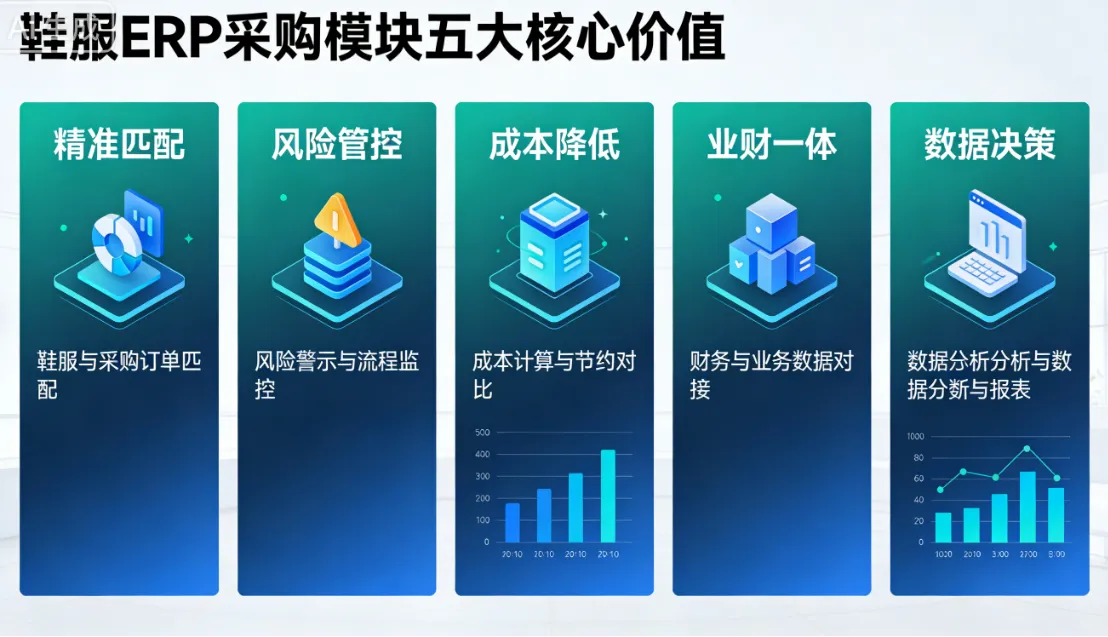
The seventh step is quality inspection and warehousing. Through IQC incoming inspection (full inspection or sampling inspection), if it is qualified, a warehouse receipt will be generated. The materials will be stored by color code and batch, and the inventory will be updated in real time, supporting production requisition; If it is not qualified, generate a non-conforming product list and coordinate with the supplier for return, replenishment, or discount processing. The eighth step is to match the three orders and verify the payment. The finance department checks the purchase order, receipt, and invoice. If they match, an A/P voucher will be automatically generated and the payment process will begin. After the payment is completed, the accounts payable will be verified and the order will be marked as "completed". At this point, the entire procurement process has been completed, with all documents automatically archived and data synchronized to reports, providing support for subsequent decision-making. For small and micro enterprises, the procurement application and complex approval process can be omitted and simplified into a 6-step process, balancing efficiency and control.
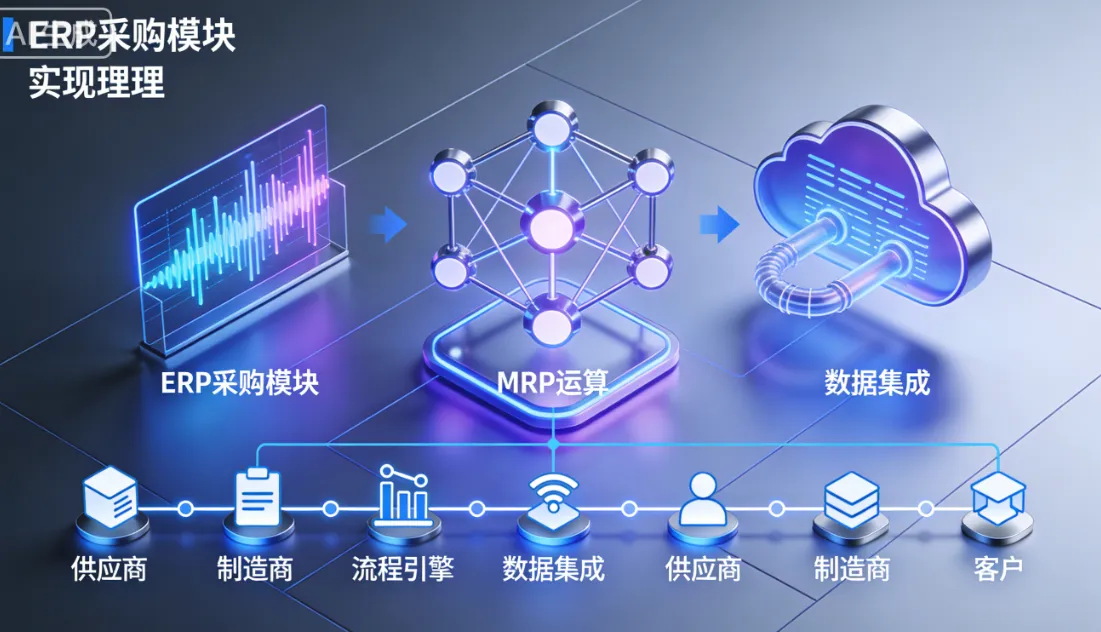
The smooth operation of this series of processes relies on the core implementation principle of the ERP procurement module - centered on MRP calculation and inventory driving, relying on process engines and data integration to achieve full process automation and collaboration. MRP calculation, as the core of requirement generation, breaks down color code level requirements according to the characteristics of the footwear and apparel industry to ensure accurate procurement requirements; Inventory driven system automatically triggers replenishment requests when materials fall below safety stock or reorder points, ensuring inventory health. The process engine achieves online and automated procurement processes through configured approval processes, status flow, and exception handling rules; Data integration connects modules such as production, inventory, finance, and supplier portals, sharing BOM, production plans, inventory data, financial vouchers, and other information to achieve full chain collaboration in the supply chain. At the same time, the module optimizes color code combination management, multi unit conversion, batch traceability and other functions based on the characteristics of the footwear and apparel industry, adapts to the special management needs of materials such as fabrics and leather, and integrates outsourcing processing and procurement management.
For footwear and apparel enterprises, the ERP procurement module is no longer an optional function, but a fundamental support for ensuring production, controlling costs, standardizing operations, and connecting the supply chain. Especially when an enterprise has over 50 models, an annual procurement amount exceeding one million, and more than 20 suppliers, manual procurement management will inevitably fall into chaos. The ERP procurement module, through precise demand calculation, standardized process control, refined cost accounting, and full chain data integration, can not only solve the pain points of traditional procurement, but also improve supply chain efficiency, reduce comprehensive costs, support data-driven decision-making, and help enterprises seize advantages in fierce market competition.
In summary, the value of the shoe and clothing ERP procurement module lies in transforming the procurement process from "passive execution" to "active control", and upgrading from "manual operation" to "intelligent collaboration"; Its standardized process and adaptive design meet the core needs of the footwear and apparel industry, achieving traceability, controllability, and optimization throughout the entire procurement process; And its implementation principle provides technical support for all of this, ensuring smooth processes and accurate data. In the future, with the continuous iteration of the footwear and apparel industry, the ERP procurement module will be further upgraded and deeply integrated with technologies such as big data and the Internet of Things, empowering the enterprise supply chain and promoting higher quality development of the enterprise.