
Say goodbye to chaotic management! Shuntong shoe and clothing ERP software enables small and medium-sized shoe and clothing enterprises to reduce costs and double efficiency
For the vast number of small and medium-sized shoe and clothing enterprises, "chaotic management" is a common problem that restricts development and is also the core root cause of compressed profit margins. In 2026, competition in the footwear and apparel industry will continue to intensify, with top brands seizing the market through refined management. However, most small and medium-sized enterprises are still trapped in the dilemma of "disorderly production, disorderly inventory, vague costs, and inefficient collaboration" - poor coordination of workshop processes, lagging order delivery, accumulation of SKUs in warehouses, discrepancies between accounts and reality, extensive cost accounting, serious waste, fragmented data and internal communication among departments. These problems are stacked layer by layer, not only making managers exhausted, but also leading to low efficiency and high costs for enterprises, making it difficult for them to compete in the stock market. Shuntong Shoe and Clothing ERP software accurately fits the business scenarios of small and medium-sized shoe and clothing enterprises, breaking management chaos through full process digital control, focusing on the dual core of "cost reduction" and "efficiency improvement", helping enterprises to break away from extensive management, achieve doubled operational efficiency, precise cost control, and build a solid foundation for survival and development.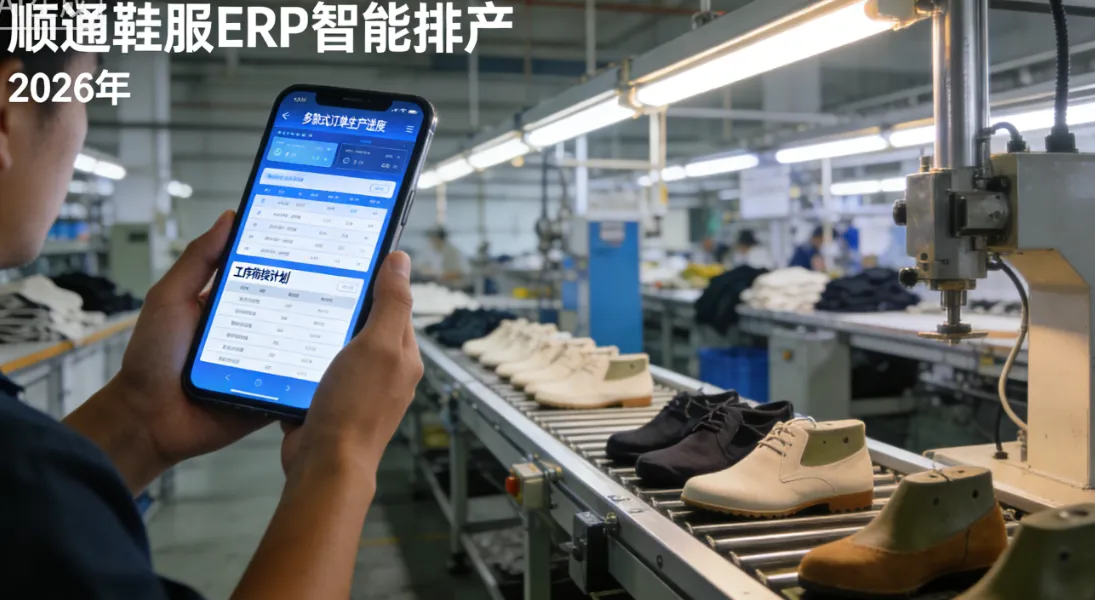
The chaotic management of small and medium-sized shoe and clothing enterprises is first reflected in the production process and is also a key bottleneck restricting efficiency improvement. Unlike the large-scale production of large enterprises, small and medium-sized enterprises mainly focus on small batch, multi style, and fast iteration orders. A product can have dozens of SKUs in multiple colors and sizes, and the process routes for different styles vary significantly. Under the traditional management mode, production scheduling relies on manual experience and lacks scientific planning, which can easily lead to problems such as interrupted process connections, idle equipment, and waste of production capacity. When urgent orders are placed, it is even more chaotic, resulting in longer production cycles and lower on-time delivery rates for orders. At the same time, there is no standardized use of materials and no tracking of consumption during the production process. The loss rate of raw materials such as leather and fabrics remains high. Industry data shows that small and medium-sized shoe and clothing enterprises that have not introduced professional ERP generally have a raw material loss rate of 8% -15%, and some enterprises even have higher rates, which increases production costs. In addition, worker reporting and salary accounting rely on manual recording, which is prone to omissions and errors, not only increasing financial burden, but also easily causing salary disputes and affecting team stability.
The disorganized inventory management is another major pain point for small and medium-sized shoe and clothing enterprises, which directly leads to capital accumulation and resource waste. The footwear and apparel industry has a wide variety of SKUs, with raw materials covering multiple categories such as fabrics, soles, and accessories. Finished shoes need to be stored by style, size, and color, and traditional manual ledger management cannot achieve precise control. There is no standardized process for warehouse entry and exit, and there is a lack of scanning tools. Manual counting and recording are relied upon, which not only reduces efficiency but also increases the risk of errors, omissions, and discrepancies between accounts and reality; During inventory, it is necessary to stop work and organize, which is time-consuming, labor-intensive, and has a large margin of error, resulting in managers being unable to accurately grasp the real inventory situation - either best-selling items are missing out on business opportunities, or unsold items accumulate for a long time, occupying a large amount of funds and storage space. Some small and medium-sized enterprises have inventory turnover cycles of up to 3-6 months, and a large amount of cash flow is deposited, affecting the circulation of enterprise funds.
The confusion in cost accounting and departmental collaboration has further compressed the profit margins of small and medium-sized shoe and clothing enterprises. Small and medium-sized enterprises generally lack a refined cost accounting system, and raw material procurement, labor costs, equipment depreciation, logistics expenses, etc. cannot be accurately allocated to each SKU. Managers find it difficult to clearly grasp the profitability of individual products, and pricing decisions are blind. Either pricing too high affects sales volume, or pricing too low leads to losses. At the same time, the procurement process lacks systematic control, supplier management is decentralized, and procurement plans are disconnected from production needs, which can easily lead to problems such as overbought, missed, or delayed delivery of raw materials. This can either cause inventory backlog or lead to production downtime for materials. In addition, departments such as sales, production, inventory, and finance work independently, and data cannot be synchronized in real time, resulting in information silos. For example, the sales department cannot quickly confirm inventory and production progress after receiving orders, and the production department cannot obtain order change information in a timely manner. Communication and internal friction are severe, greatly reducing overall operational efficiency.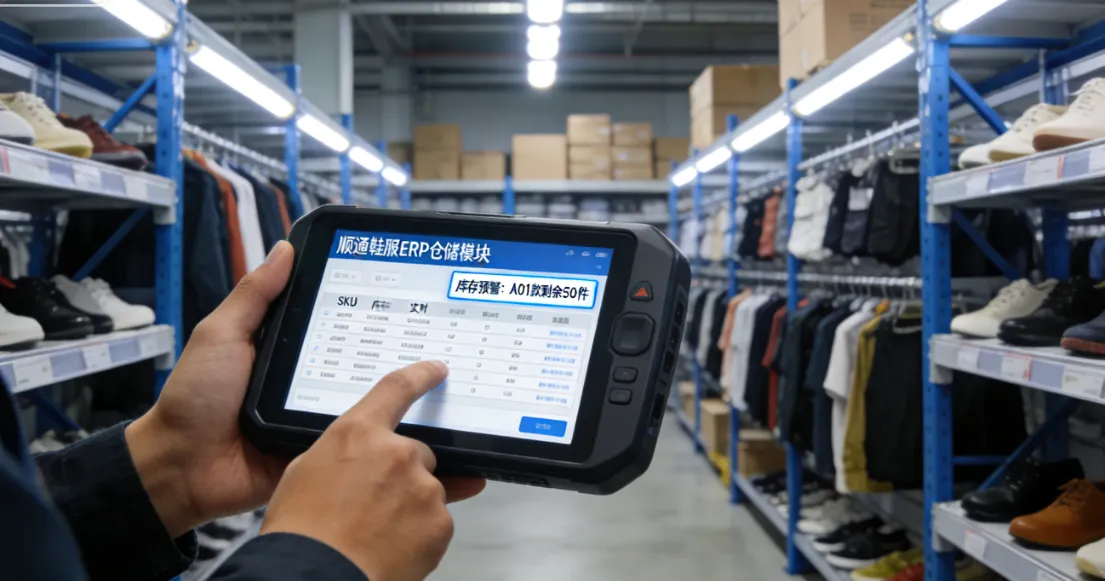
The core value of Shuntong Shoe and Clothing ERP software is to accurately crack the management chaos mentioned above, achieve precise control of the entire process through customized functions, and make the implementation of "cost reduction" and "efficiency improvement" effective. In response to the chaos in the production process, Shuntong ERP is equipped with an intelligent scheduling module exclusive to the footwear and apparel industry. Without complex operations, it can automatically generate scientific scheduling plans based on order priority, equipment capacity, and process dependencies. It supports rapid adjustment of emergency insertion orders and synchronously distributes them to various workshops and teams, ensuring smooth process connection, efficient equipment utilization, and effectively shortening production cycles. After most small and medium-sized enterprises go online, the production cycle can be shortened by 20% -40%, and the on-time delivery rate of orders can be increased to over 95%.
At the same time, the system realizes real-time tracking of material consumption in the production process, standardizes the material requisition process, and allows workers to scan codes and report work through mobile devices to accurately record the usage of materials in each process. Loss thresholds are set, and once the threshold is exceeded, warnings are automatically pushed to help enterprises reduce the raw material loss rate to below 5%, saving a lot of raw material costs every year. In response to the pain points of manual job reporting and salary accounting, the system integrates piece rate salary automatic accounting function. Based on job reporting data and preset unit prices, it automatically generates employee salary details, completely eliminating manual recording errors, reducing financial accounting burden, reducing salary disputes, and stabilizing employee teams.
At the inventory management level, Shuntong ERP solves the problem of chaos with "multi-dimensional precise control" and adapts to the management needs of multiple SKUs in the footwear and apparel industry. The system supports the construction of inventory data structure based on "product code+size+color+batch", assigning unique identity codes to each batch of materials and finished products, combined with scanning function, to achieve digital operation of the entire process of warehousing, outbound, and inventory. The inventory efficiency is improved by more than 80%, and the inventory accuracy can reach 99.9%, without the need for downtime inventory, greatly reducing the impact on production. The system is equipped with an intelligent inventory warning mechanism that can set safety stock thresholds based on production and sales needs. When best-selling items are out of stock or unsold items accumulate, reminders will be automatically triggered to help managers optimize inventory structure and accelerate inventory turnover. After most enterprises go online, the inventory turnover cycle can be shortened to 1-2 months, releasing accumulated funds and improving cash flow.
In response to the pain points of cost accounting and departmental collaboration, Shuntong ERP achieves accurate cost accounting and cross departmental data collaboration throughout the entire process. The system can capture real-time cost data of procurement, production, inventory and other links, automatically collect and accurately allocate it to each SKU, generate detailed cost details and profit analysis reports, allowing managers to clearly grasp the profit situation of each product, accurately formulate pricing strategies, and avoid the risks caused by blind pricing. At the same time, the system breaks through information silos, integrates sales, production, inventory, finance and other full chain data, and achieves real-time synchronous sharing - the sales department can quickly query inventory and production progress, and accurately match customer needs; The production department can timely obtain order information and change notifications, optimize production plans; The finance department can automatically synchronize various data, efficiently complete accounting processing and report generation, reduce communication and internal friction, and improve overall operational efficiency by more than 50%.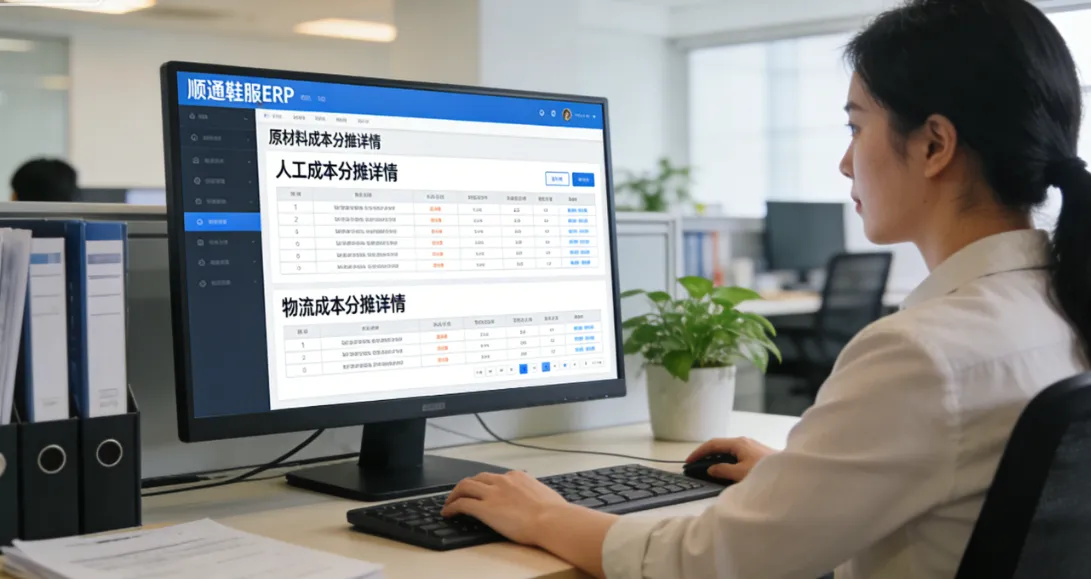
More in line with the needs of small and medium-sized shoe and clothing enterprises, Shuntong ERP abandons the redundant functions and high costs of traditional heavy-duty ERP and adopts a lightweight SaaS deployment model, which does not require a large amount of investment in building hardware equipment. It can subscribe annually and select functional modules as needed, with an annual cost of only 1/5-1/3 of traditional customized ERP, greatly reducing the threshold for digital transformation of small and medium-sized enterprises. At the same time, the system operation is simple and easy to understand, without the need for a professional IT team. Workshop workers, warehouse managers, and finance personnel can quickly get started after simple training. It is also equipped with a local professional after-sales team to quickly respond to operation and maintenance needs, solve the concerns of small and medium-sized enterprises about "not knowing how to use and not using well", and ensure that the system is quickly implemented and effective.
In 2026, the competition among small and medium-sized shoe and clothing enterprises has upgraded to competition in management efficiency. Saying goodbye to chaotic management and achieving refined operation is the necessary path for enterprises to break through. Shuntong Shoe and Clothing ERP software, with the actual needs of small and medium-sized enterprises as its core, does not pursue a "big and comprehensive" approach, but only focuses on "precision and accuracy", accurately solving core management pain points such as production, inventory, cost, and collaboration. It not only helps enterprises reduce raw material losses, reduce capital accumulation, and compress communication costs, but also helps enterprises improve production efficiency, delivery efficiency, and collaboration efficiency, achieving doubled operational efficiency. For the vast number of small and medium-sized shoe and clothing enterprises, Shuntong ERP is not only a management tool, but also a "booster" to break free from extensive management and achieve high-quality development, helping enterprises to stand firm and break through growth bottlenecks in fierce market competition.