
What are the benefits of migrating ERP systems to the cloud?
Cloud transformation: a strategic leap in the digitalization process of enterprises
When a company decides to migrate its ERP system to the cloud, it represents not only a change in the way technology is deployed, but also a profound transformation in the company's operational model and management thinking. The migration from traditional ERP deployed locally to cloud ERP is becoming a core initiative for enterprise digital transformation on a global scale. The impact of this transformation is multidimensional and systematic, involving multiple levels such as cost structure, operational efficiency, innovation capability, and strategic agility.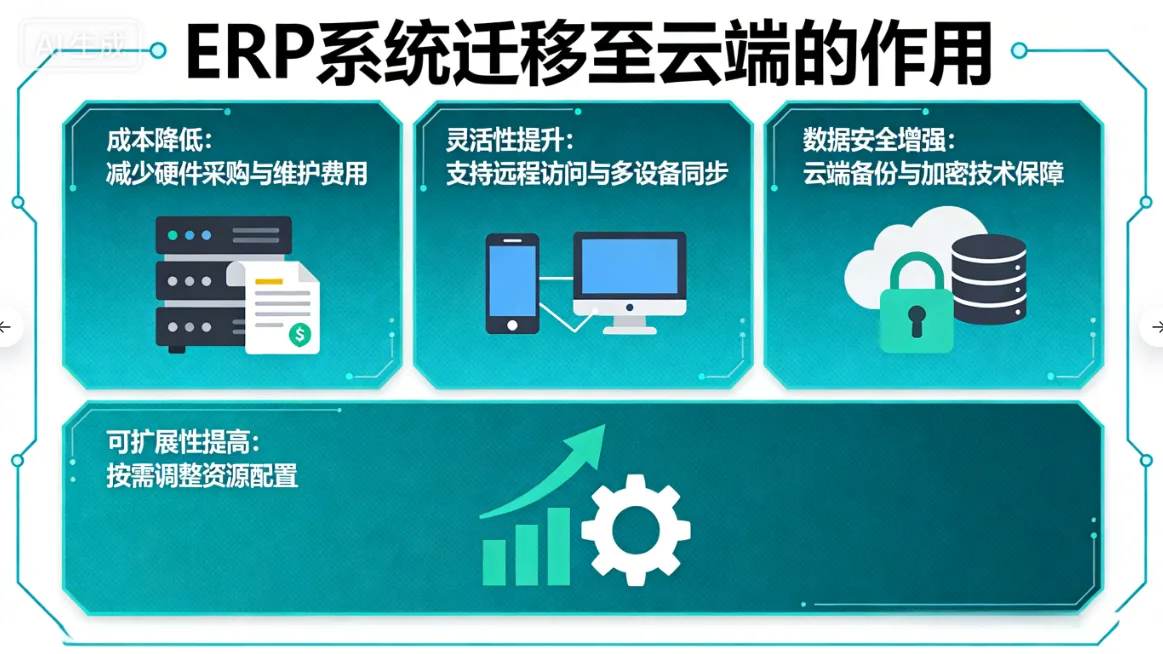
Financial structure optimization and cost transparency
The most direct role of cloud ERP is reflected in the optimization of enterprise financial structure. Traditional local deployment of ERP requires enterprises to bear high initial investment, including server hardware, network equipment, data center facilities, software licenses, and the cost of building and maintaining a professional IT team. These initial investments have formed a heavy capital expenditure burden and have a high risk of sinking. In contrast, cloud ERP adopts a subscription based service model, which converts one-time large investments into predictable recurring operating expenses, greatly alleviating the cash flow pressure of enterprises.
This "pay as you go" model allows enterprises to flexibly adjust resource allocation based on actual usage, avoiding excessive investment in hardware facilities to cope with potential peak demand in the future. More importantly, the pricing of cloud ERP typically includes all costs such as software licenses, infrastructure, maintenance support, and regular upgrades, providing enterprises with a fully transparent IT cost structure. Enterprises no longer need to prepare additional budgets for sudden hardware failures, security patches, or version upgrades. All costs are included in regular subscription fees, making financial forecasting and planning more accurate and reliable.
Comprehensive improvement of operational efficiency and system availability
Cloud ERP provides enterprises with system availability and performance guarantees far beyond on premises deployment through the global infrastructure provided by professional cloud service providers. Leading cloud platforms such as AWS, Azure, or Alibaba Cloud typically offer service level agreements of 99.9% or higher, equipped with cross regional redundant backups and automatic failover mechanisms to ensure maximum business continuity. Enterprises do not need to build and maintain complex high availability architectures on their own to achieve enterprise level system stability.
At the daily operational level, the centralized deployment of cloud ERP makes remote collaboration and mobile office more natural and efficient. No matter where employees are, they can safely access the system through Internet connection, which especially meets the needs of mixed office mode in the post epidemic era. At the same time, cloud service providers are responsible for monitoring, maintaining, and upgrading all infrastructure, freeing enterprise IT teams from tedious daily operations and enabling them to focus on more strategically valuable business support and innovation work.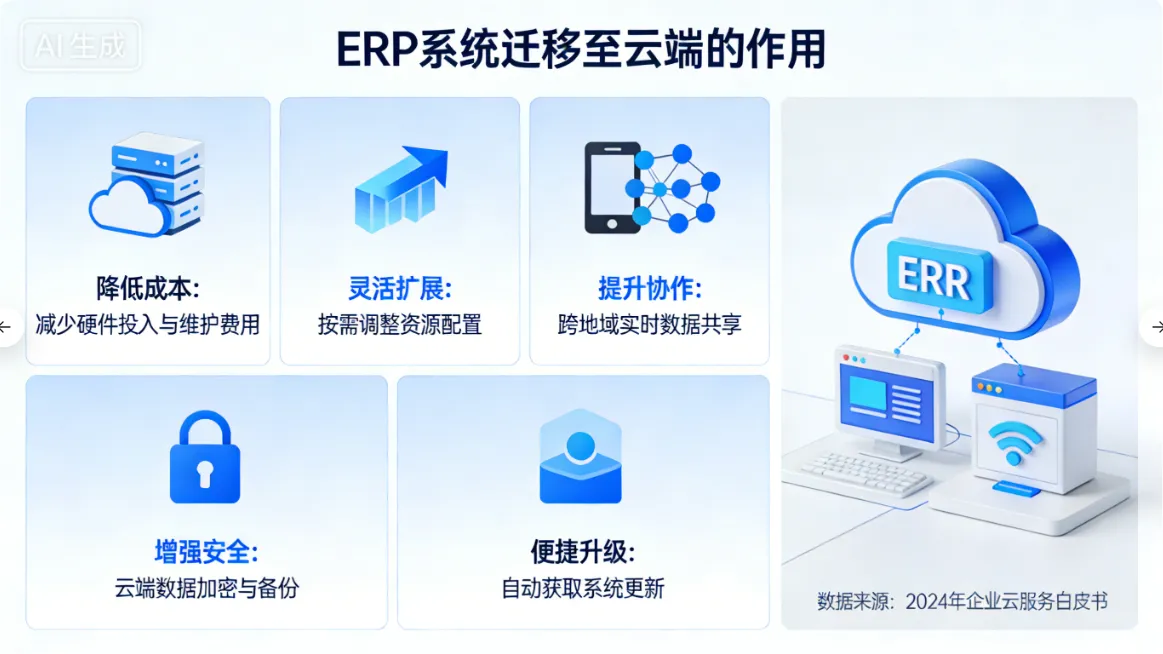
System updates and feature enhancements are another significant advantage of cloud ERP. Cloud service providers will regularly and seamlessly push the latest features, security patches, and performance optimizations to ensure that enterprises always run on the latest and most secure software versions. This continuous delivery model completely eliminates the complex planning, testing, and downtime windows in the traditional ERP upgrade process, enabling enterprises to quickly obtain the business value brought by technological innovation and maintain a competitive advantage.
Fundamental enhancement of business agility and scalability
In the rapidly changing market environment, business agility has become the core competitiveness of enterprises. Cloud ERP provides unprecedented scalability and flexibility for enterprises, enabling them to quickly respond to changes in business needs. When enterprises need to explore new markets, establish branch offices, or cope with seasonal business peaks, the resource elasticity of cloud ERP enables them to complete user expansion, storage expansion, or computing power enhancement within minutes without going through time-consuming hardware procurement, installation, and configuration processes.
This agility is also reflected in the convenience of system integration. Cloud ERP typically provides rich application programming interfaces and pre built connectors, making it easier to integrate with various SaaS applications, IoT platforms, and partner systems. Enterprises can flexibly build a digital ecosystem that suits their own needs, quickly introducing innovative technologies such as artificial intelligence analysis, machine learning prediction, or blockchain traceability, without being limited by traditional system architectures.
For group enterprises or organizations with multiple branches, cloud ERP provides a consistent global deployment framework. All branch offices use the same system version and data model to ensure standardized business processes and data consistency, while supporting necessary localized configurations to meet region specific needs. This ability of "global unity and local adaptation" provides a solid technological foundation for the scale expansion and global operation of enterprises.
Strengthening Security Compliance and Data Protection
The security advantages of cloud ERP are often underestimated. In fact, the investment and technological accumulation of leading cloud service providers in the field of security far exceed the capabilities of the vast majority of enterprises' own data centers. They have formed a professional security team, implemented a multi-layer protection architecture, including comprehensive protection measures such as physical security, network security, application security, and data encryption, and continuously monitored and responded to emerging threats.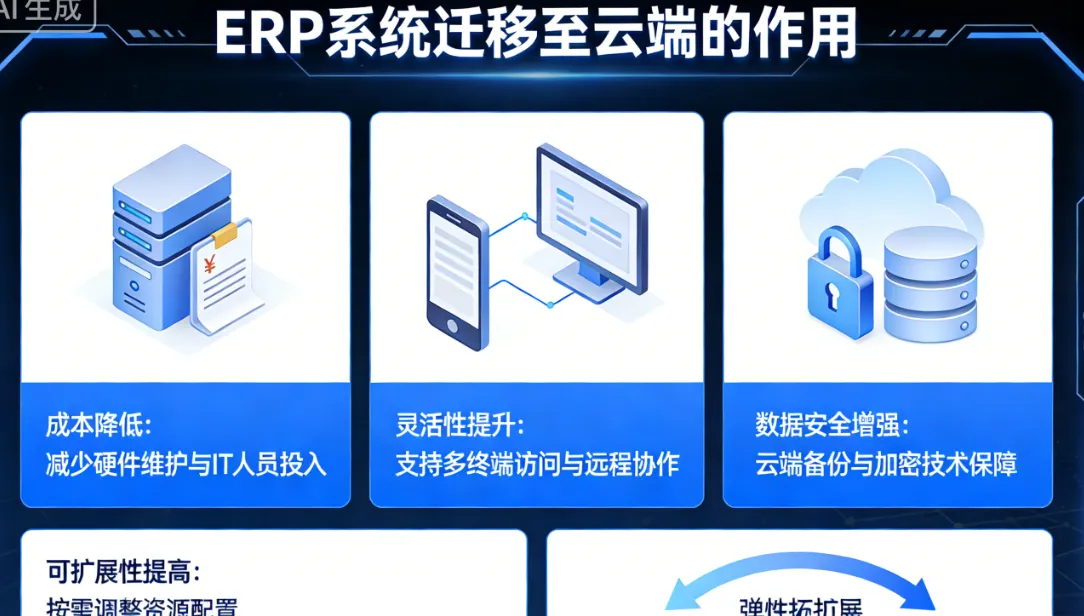
In terms of compliance, cloud service providers typically have obtained multiple international and industry certifications, such as ISO 27001, SOC 2, GDPR, HIPAA, etc., providing a solid foundation for enterprises to meet various regulatory requirements. When new regulations are introduced, cloud service providers will promptly update their compliance framework to help customers reduce compliance risks and costs. In addition, cloud ERP provides comprehensive audit logs, access control, and security reporting functions, enabling enterprises to better meet internal audit and external regulatory requirements.
Data backup and disaster recovery are another key advantage of cloud ERP. Cloud service providers automatically perform cross regional data backups and provide one click recovery capabilities to ensure the protection of enterprise data in the event of unexpected events. Compared to traditional local backup solutions, cloud based disaster recovery solutions are more reliable, cost-effective, and have shorter recovery times.
Innovation Empowerment and Future Adaptability
Cloud ERP is not only an optimization of existing business processes, but also an incubation platform for future innovation capabilities of enterprises. The cloud based modern architecture naturally supports the integrated application of cutting-edge technologies such as big data analysis, artificial intelligence, and the Internet of Things. Enterprises can utilize the complete business data accumulated by cloud ERP, combined with advanced analysis tools, to gain deep business insights and drive data-driven decision-making and innovation.
With the continuous evolution of business environment and technology ecology, cloud ERP provides future oriented adaptability. Enterprises can easily try new functional modules or third-party applications as needed without incurring high trial and error costs. This low-risk experimental capability encourages the formation of an innovative culture, enabling companies to maintain a leading position in the digital wave.
The open platform characteristics of cloud ERP also promote the construction of enterprise ecosystems. Enterprises can establish closer digital connections with suppliers, customers, and partners, achieve end-to-end business process collaboration, and create new value networks and business models. This ecological development is a strategic advantage that traditional closed systems find difficult to achieve.
Conclusion
Migrating ERP systems to the cloud is a crucial step in the digital transformation journey of enterprises. This transformation not only brings about updates in technological architecture, but also a comprehensive upgrade in enterprise operating models, cost structures, innovation capabilities, and strategic flexibility. From reducing overall cost of ownership and improving cash flow, to enhancing system availability and business continuity; From enhancing security compliance and data protection, to empowering future innovation and ecosystem building, cloud ERP provides enterprises with comprehensive solutions to address the challenges of the digital age.
Of course, migrating to the cloud also requires careful planning by enterprises, considering various factors such as data migration strategies, integrated architecture design, organizational change management, and supplier selection. However, for enterprises seeking to enhance competitiveness, accelerate innovation, and achieve sustainable development, migrating to cloud ERP is no longer a matter of choice, but rather a matter of time and path. In this inevitable wave of transformation, pioneers will gain a first mover advantage that shapes the future of the industry, while observers may face the risk of being eliminated by a redefined market.