
The practical application value of shoe and clothing ERP for shoe and clothing factories in the context of small order fast response
The current shoe and clothing manufacturing industry is characterized by fragmented orders, with more small orders, repeat orders, and replenishment orders. At the same time, fabric and accessory costs fluctuate, and factory profits are generally thin; Many factories simultaneously undertake foreign trade, wholesale, and e-commerce orders, with a high proportion of outsourcing processing. The SKU structure of the footwear and apparel business itself is complex, requiring differentiation by style, color, and code. Changes in style and proportion often occur. Many factories have long relied on Excel, WeChat, and paper documents for document tracking, and their management highly relies on the personal experience of senior document tracking, pattern makers, and production supervisors. This can easily lead to problems such as scattered data, unclear progress, inaccurate cost calculations, and production scheduling relying on experience. Shoe and clothing exclusive ERP is a management tool that fits the business processes of garment and shoe manufacturing. It does not directly guarantee factory revenue increase and zero errors, but helps factories improve their management status through online processes and unified data retention.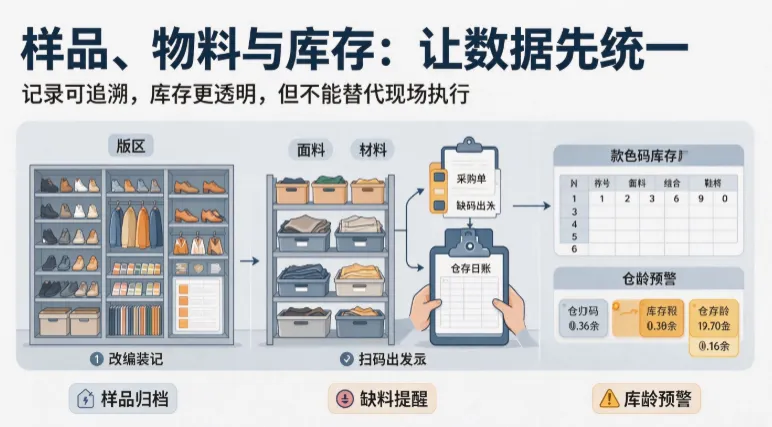
Samples and layout rooms are the prerequisite for accepting orders. Most shoe and clothing orders require sample confirmation first, and repeated revisions, fabric changes, and process adjustments are common. Using ERP can unify and archive sample lists, version records, customer confirmation information, and material BOM for easy reference and comparison in the future. Based on the sample material data, the basic cost can be estimated as a reference for quotation. But it should be noted that the system can only settle records and output accounting basis, and the final quotation judgment and process feasibility still need to be confirmed by the typesetter and business personnel. The system cannot rely on automatic guarantee of no loss in quotations.
In terms of material and procurement management, the system can calculate MRP material requirements based on the order BOM, combined with existing inventory, in transit procurement, and materials already sent to outsourcing, output a shortage list for procurement reference, and assist in following up on material delivery dates in advance. The measurement units for shoe and clothing materials are complex, with different units for fabric, leather, and accessories. The system supports multi unit registration and loss registration, making it convenient to calculate fabric requisition, cutting machine loss, and outsourcing loss. The system can record suppliers, historical unit prices, and agreed delivery dates for easy comparison in the future. Here we need to take an objective view: the system can remind suppliers of material shortages, but cannot force them to deliver on time. The effectiveness of fabric loss control is also directly related to the cutting process and on-site management, and the system is only responsible for recording data.
In terms of inventory management, the shoe and clothing ERP has native 3D SKUs that are compatible with styles, colors, and codes. The shoe making scene also supports coding and box specification registration. Raw material warehouse, semi-finished product warehouse, finished product warehouse, and outsourcing warehouse can be separately accounted for, and inventory registration can be completed by scanning the code, reducing the probability of manual accounting errors and shortening inventory time. The system can track inventory age, mark materials and finished products that have not been moved for a long time, and provide managers with reference for inventory disposal. If connected to sales channels, inventory data can be synchronized, but the prerequisite for accurate data is timely entry of inbound and outbound documents; If the documents are missed or recorded late, the inventory data will still be distorted, and automatic elimination of out of stock or unsold products cannot be achieved.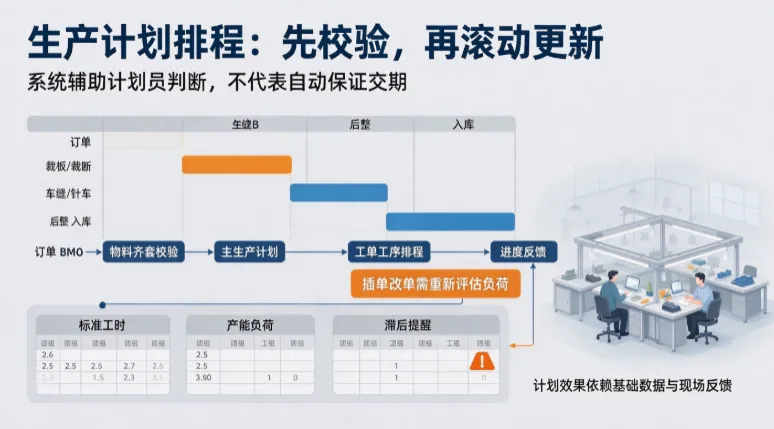
Production planning and scheduling is a key module for factories to use ERP. The scheduling of shoes and clothing itself has many constraints: uncertain material arrival, urgent order insertion, outsourcing of processes, and different bottleneck processes in different factories. The bottleneck of clothing factories is mostly in the cutting machine, while the bottleneck of shoe factories is mostly in the forming assembly line. The vast majority of shoe and clothing ERP systems come with built-in scheduling, which is not fully automated optimal scheduling (unlike independent APS advanced scheduling), but ratherFirst, verify that the materials are complete, and then create a visual rolling plan layer by layerThe pattern.
The first step in scheduling is pre validation: the system retrieves the order BOM、 Material inventory and procurement progress, assess the completeness of materials, and mark missing material orders. The purpose is to help planners identify the risk of "putting materials into production if they are not complete" and reduce the downtime caused by blind scheduling. But the system can only make judgments based on the entered material data. If the procurement lead time itself is an estimated value, there may also be deviations in the verification results.
Next is hierarchical production scheduling. The first layer is the rough production plan, which is based on orders and item numbers. Customer delivery dates, order priorities, and batch shipping requirements are entered, and the cutting, starting, finishing, and warehousing times of each item are displayed on the Gantt chart, making it convenient for planners to view the future production capacity load and identify overloaded processes. In case of urgent order insertion, the system can display the impact of the original order, assist the planner in evaluation, and ultimately decide whether to adjust and how to adjust, which will be decided by the production manager. The second layer is the work order level sorting, which breaks down orders into corresponding process work orders. Based on the pre maintained process standard working hours and team capacity, the planned start and end time of the work order is calculated. After the work order is issued, the workshop reports the actual progress by scanning the code and writing it back to the plan board. When there is a delay in progress, a reminder is given.
For the common outsourcing processing, the system can register the information of outsourcing factories, outsourcing work orders, material issuance records, required return time, track the pending processing tasks of multiple outsourcing factories, and avoid all orders being centralized to the same outsourcing factory. After the outsourced materials are registered and stored, they can be transferred to the next process in our factory. The system only keeps progress records and alerts, and cannot control the internal production capacity and processing quality of outsourced factories.
Order changes are very common in the footwear and apparel industry. When customers change colors, mix ratios, add rework orders, or generate rework orders, they can update the BOM or add rework orders in the system, and the related material requirements and production plans can be updated synchronously without manually modifying multiple Excel files. Plans are updated on a rolling basis, usually updating short-term plans on a daily basis; But the more frequent the changes, the more workload for plan adjustments will increase, and the system cannot eliminate the production fluctuations caused by the changes themselves.
In the process of piece rate, quality inspection, cost and reconciliation, the system can collect process output and rework records of defective products, automatically summarize piece rate output, and assist in calculating worker wages; At the same time, collect various costs such as fabrics, accessories, labor costs, and outsourcing fees, calculate the gross profit of individual items, and generate accounts receivable and payable reconciliation documents. The accuracy of cost data highly depends on the timely and complete entry of all material requisition, warehousing, and expense documents; If the documents are missing, the cost accounting results will be distorted.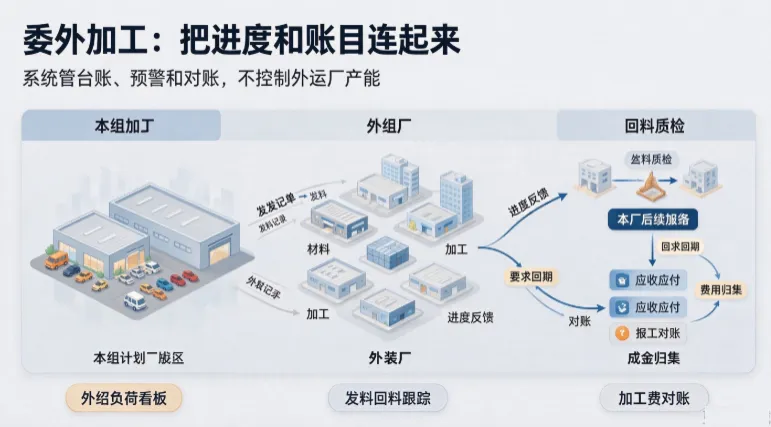
In addition, the system can collect information on processes, orders, supplier prices, etc., reducing reliance on information from individual senior employees. But it is only the carrier of information, and the operational habits and on-site execution ability of employees determine whether this set of data can be sustained and accurate.
Overall, shoe and clothing ERP is a set of management auxiliary tools. Its core function is to unify data entry, standardize document processes, and turn information that was previously scattered in individuals' hands into searchable and traceable data. It helps planning, procurement, order tracking, and finance reduce repetitive manual work and provide a clearer view of the current status of orders, materials, production, and inventory. It cannot automatically guarantee on-time shipment, automatically increase profits, eliminate defective products and delays, and the final management effect depends on the standardization of factory processes, personnel cooperation, and the quality of basic data maintenance.