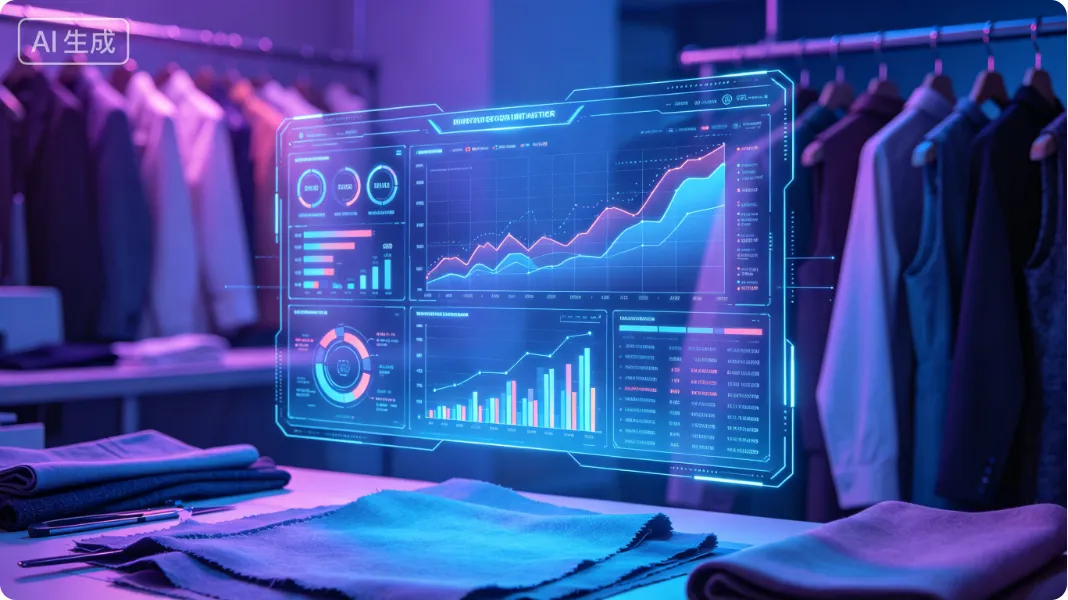
Clothing ERP: A must-have tool for small and medium-sized clothing factories to reduce costs and increase efficiency
In the current era where "small order quick response" has become mainstream in the clothing industry and market competition is becoming increasingly fierce, small and medium-sized clothing factories are facing many pain points such as high labor costs, excessive inventory backlog, chaotic production processes, and opaque profits. Many small and medium-sized factory owners mistakenly believe that "ERP is exclusive to large enterprises", but in fact, a suitable clothing ERP has already become a necessary tool for small and medium-sized factories to reduce costs, increase efficiency, stabilize orders, and achieve breakthroughs. It can not only directly reduce various hard costs, but also empower small and medium-sized factories from multiple dimensions such as processes, management, and order taking, making digital transformation no longer out of reach.
1、 Clothing ERP: Directly cutting 6 major hard costs, saving every penny on the cutting edge
For small and medium-sized clothing factories with limited profit margins, "cost saving" means "making profits". One of the core values of clothing ERP is to replace manual labor and optimize processes through digital means, reducing unnecessary losses and waste at the root and achieving precise cost control.
First of allLabor management costA significant decrease. In the past, small and medium-sized factories required dedicated clerks to handle manual bookkeeping, paper billing, inventory statistics, wage reconciliation, and other tasks, which were not only time-consuming and labor-intensive, but also prone to errors. After the introduction of clothing ERP, all these tedious tasks can be automated without the need for too many internal staff, order tracking, and statistical positions, achieving efficient office work with one person and multiple positions, directly reducing labor input and lowering labor costs.
Next isinventory costOptimization of. Fabric and accessories are the core consumables in clothing production, and they are also the most wasteful links for small and medium-sized factories - either excessive procurement leads to stagnant inventory and occupies working capital; Either inaccurate calculation leads to waste of surplus materials and additional expenses. Through precise material calculation function, clothing ERP can accurately calculate the amount of fabrics and accessories used according to order requirements, strictly control losses, and synchronize inventory data in real time to avoid duplicate purchases and activate backlogged inventory, allowing each batch of materials to be fully utilized and reducing capital occupation.
Furthermore, it isProduction loss costThe control. Small and medium-sized factories often encounter problems such as excessive cutting machine wear, high rework rates for sewing, and too many defective products due to inconsistent process standards and chaotic processes, which not only waste fabrics but also delay working hours. Clothing ERP can unify process standards, monitor various production processes in real time, timely warn of abnormal wear and tear in cutting machines, sewing and other processes, reduce fabric waste and labor hour loss, and improve production qualification rate.
In addition, ERP can effectively reduceInternal communication costs——From receiving orders, sampling, procurement to cutting machines, workshop production, and final shipment, the entire process involves data exchange to prevent errors, omissions, delays, and other issues caused by verbal communication, and to avoid overdue penalties and customer losses due to communication errors; reduceTime delivery costBy automatically scheduling and tracking progress in real-time, we can shorten the sampling and production cycle, making order delivery more timely; reduceFinancial reconciliation costAutomated calculation of workers' piece rate wages, workshop hours, material costs, order gross profit, etc. eliminates the tedious process of manual salary calculation and reconciliation, and reduces reconciliation disputes.
2、 Using clothing ERP in small and medium-sized clothing factories not only reduces costs, but also solves core pain points
For small and medium-sized clothing factories, the value of clothing ERP is far more than just "cost saving", but also lies in its ability to solve various "old and difficult" problems in production management, enhance core competitiveness, and enable small factories to take on stable and successful orders.
The most obvious benefit is thatUpgrade the ability to accept orders and adapt to the trend of quick response for small ordersNowadays, there is an increasing demand for personalization and fragmentation in the market, and small orders, urgent orders, and flipping orders have become the norm. Many small and medium-sized factories are afraid to accept small orders or urgent orders due to slow material calculation, long price verification, and inaccurate project schedule reporting. Clothing ERP can quickly complete material calculation, pricing, and schedule accounting, making it easy to handle small orders, urgent orders, and flipping orders. At the same time, it can accurately control the schedule, avoid blindly accepting orders, avoid losing customers due to schedule delays, and broaden the channels for accepting orders.
Next isStandardization of workshop processes, no longer 'disorderly orders'Small and medium-sized factories commonly have problems with chaotic production processes and opaque order progress, often resulting in unclear quantities of cut, made, and leftover goods, as well as situations such as lost goods, incorrect products, mixed codes, and colors. Clothing ERP can track the progress of orders in real time, from cutting, sewing to final shipment. The flow of each process is clear and traceable, making workshop management more standardized, reducing human errors, and improving production efficiency.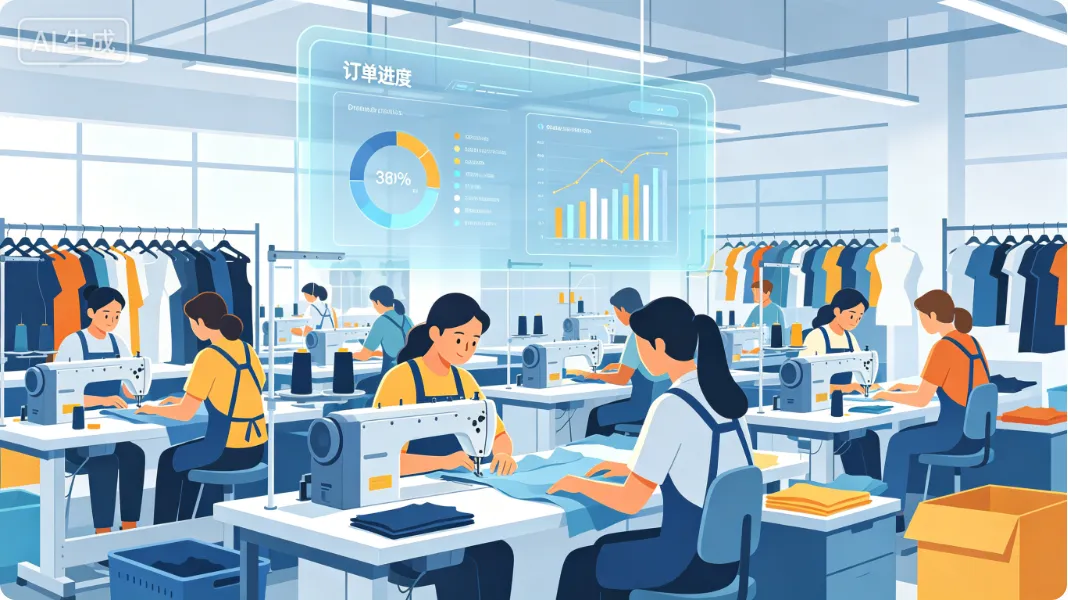
For bosses and workers,Piece rate wages are automatically calculated, making both labor and management worry freeIn the past, workers relied solely on manual recording of piece rates, which was not only time-consuming but also prone to reconciliation and disputes, affecting workers' enthusiasm and causing management trouble for bosses. Clothing ERP supports scanning codes to record production processes, automatic production statistics, and accurate and transparent salary calculations. Workers can clearly see their workload and wages, and bosses no longer need to spend a lot of time reconciling accounts, reducing labor disputes and facilitating management.
In addition, ERP can also enableClear inventory management, no pressure on moneyReal time inventory of fabrics, lining, zippers, buttons and other accessories is clear at a glance, and procurement can be accurately ordered according to order requirements, without blind procurement, activating working capital, and avoiding difficulties in capital turnover caused by inventory backlog. At the same time, ERP canAccurately calculate profitsAutomatically calculate the fabric cost, labor price, accessory cost, and miscellaneous expenses for each order, allowing the boss to clearly know which order is profitable and which one is losing, timely eliminate low price unprofitable orders, and improve the overall profitability level.
For bosses who need to frequently go out, clothing ERPRemote management functionMore practical - through mobile phones or computers, you can check production progress, inventory status, worker wages, and revenue data at any time, even if you are not in the workshop, you can fully control factory operations, worry free and efficient. Moreover, the lightweight clothing ERP suitable for small and medium-sized factories nowadays is affordable, easy to operate, and does not require complex deployment. It can be put into use in 1-3 days, with small investment and fast cost recovery, and will not bring any financial or technical pressure to small and medium-sized factories.
3、 Choosing clothing ERP for small and medium-sized factories, focusing on essential functions is enough
Choosing ERP for small and medium-sized factories can meet daily production management needs and avoid waste by focusing on core essential functions without pursuing "big and comprehensive". The core essential functions mainly include 6 points: order management and sample management, precise control of the entire order process; BOM material accounting and fabric accessory inventory management to reduce material waste and inventory backlog; Cutting bed management and workshop process flow, standardize production processes; Workers scan codes to calculate piece rate wages, simplifying wage accounting; Production progress tracking, real-time monitoring of production dynamics; Cost accounting and order profit and loss statement, with a clear understanding of profitability.
4、 Conclusion: Clothing ERP is the "key" to the digital transformation of small and medium-sized factories
In the current clothing industry, digital transformation is no longer a privilege for large enterprises, but an inevitable choice for the survival and development of small and medium-sized factories. Clothing ERP has never been a luxury item, but a "must-have tool" that can help small and medium-sized factories reduce manpower, waste, inventory, errors, and account reconciliation troubles. It is also a "powerful tool" to improve order taking ability, production efficiency, and profit transparency.
For small and medium-sized clothing factories, introducing a suitable clothing ERP can not only quickly reduce operating costs, but also standardize management and stabilize orders, allowing small factories to stand firm in fierce market competition and even achieve a leap from small factories to large factories. Choosing the right ERP is choosing a more efficient, worry free, and promising development path.