
The Digital Intelligence Era Business Finance Integration and Accounting Future Theme Salon was successfully held in Guangzhou
In March, in Guangzhou, kapok blossoms, and in the conference hall of Four Seasons Hotel on the the Pearl River bank, an ideological debate about the future of accounting is being staged. The "Digital Intelligence Era Business Finance Integration and Accounting Future" themed salon, jointly organized by the Guangdong Accounting Society and the Guangzhou Digital Economy Association, and co hosted by the School of Management of Jinan University and Kingdee Software (China) Co., Ltd., recently came to a successful conclusion in Guangzhou. More than 300 guests, including corporate finance executives, university experts and scholars, consulting firm partners, and regulatory representatives, gathered together to engage in in-depth discussions on topics such as the technological path of business finance integration, the reconstruction boundaries of accounting functions, and the transformation of financial talent cultivation. This salon, which lasted for a whole day, did not have a traditional guest speech session. Instead, it opened with two parallel forums - on the left side, enterprise CIOs and CFOs discussed data governance, and on the right side, scholars and policy makers discussed the evolution of standards. The crowd shuttled between different topics in the venue, just like the ancient discipline of accounting is searching for new anchors in the wave of digital intelligence.
In his keynote speech this morning, Professor Lin Bin from the School of Management at Sun Yat sen University outlined the deep logic of the integration of business and finance with the theme of "the boundaries of accounting are dissolving". He proposed that the core function of traditional accounting is recording and reporting, and its underlying assumption is that there is a natural temporal difference between business and finance - business occurs first, accounting occurs later. Digital technology is eliminating this timing difference. When each purchase order is generated in the system, the A/P estimation is automatically triggered. When each sales outbound scanner sounds, revenue and cost are synchronously recognized. Accountants no longer need to wait until the end of the month to know the company's operating results. Lin Bin believes that the essence of the integration of business and finance is not for finance to actively move towards business, but for business and finance to share the same set of facts in the digital space. This set of facts consists of orders, work orders, warehouse receipts, and shipping orders, and the role of accountants has shifted from being recorders of facts to interpreters of facts.
In the subsequent sharing, Zhao Yanxi, Senior Vice President of Kingdee China, demonstrated the practical state of business finance integration on the enterprise side. He took a manufacturing group with an annual revenue of billions as an example. In the past, the finance department had to process nearly 200000 invoices and 300000 bank statements every month. The accounts payable reconciliation team consisted of 12 people, and there were still 3% of the monthly differences that could not be explained. After the launch of the business finance integration platform, purchase orders, warehouse receipts, and invoices are automatically verified through the three order matching algorithm, and the differences are accurately locked to specific batches, suppliers, and operators. The team of twelve people has been streamlined to four, and the monthly billing cycle has been reduced from nine days to three days, saving manpower on supplier credit rating and cash flow forecasting. Zhao Yanxi emphasized that the value created by the integration of business and finance lies not in the improvement of financial department reporting efficiency, but in the improvement of business department decision-making quality - when the sales director can retrieve the customer's payment cycle and gross profit margin at the moment of inquiry, pricing strategy is no longer a game based on intuition.
The roundtable forum segment brought the entire salon to a climax. Zhang Wei, General Manager of Finance Department of China Southern Airlines Group, Liu Chang, Director of Digitalization Department of Guangzhou Automobile Group, Li Dan, Digital Partner of PwC China, and Lei Yu, Dean of Accounting School of Guangdong University of Finance and Economics, sat together. The first question raised by the host directly pointed to the key point: Who is responsible for the integration of business and finance. Zhang Wei believes that in the past two decades, the finance department has been constantly required to move towards business, but there has always been a time difference in the trust of business departments in financial data; The integration of business and finance should be a two-way process, where the real-time, accurate, and structured nature of data generated by business systems directly affects the confidence interval of financial analysis. Liu Chang proposed from the perspective of digital infrastructure that the bottleneck of business finance integration often lies not in software functions, but in master data governance - inconsistent material codes, incomplete supplier files, and multiple sources of customer information. These long-standing management arrears will erupt in the moment the system goes live. There is no shortcut to crossing this hurdle, only individual legal persons, materials, and customers cleaning from scratch. Li Dan added that the integration of business and finance is also a challenge for accounting firms. In the past, auditors relied on voucher spot checks and letters of confirmation. When the entire process of enterprise transactions is online and automated, the form of audit evidence shifts from paper documents to system logs and algorithm rules, and audit methodology must be iterated synchronously.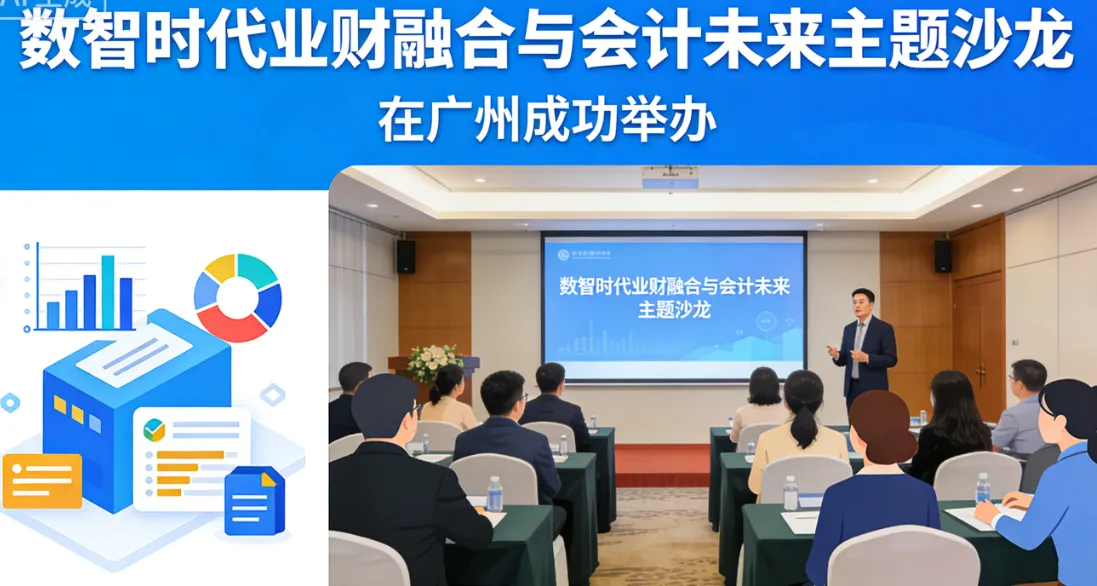
The afternoon session focused on the paradigm shift in accounting talent cultivation. Li Wenjing, Dean of the School of Management at Jinan University, released the latest round of questionnaire survey results for financial managers of enterprises in the Guangdong Hong Kong Macao Greater Bay Area. The data shows that 76% of respondents believe that "data insight and business analysis" are the most scarce abilities for financial personnel in the next five years, while the urgency ranking of "accounting processing and report preparation" has fallen to 11th place. This conclusion resonated strongly with the HR managers of the participating companies. The Chief Financial Officer of a multinational consumer goods company in China admitted that the accounting resumes received during annual campus recruitment still revolve around transcripts, certificates, and internship experiences as the core narrative. However, during interviews, she is more interested in hearing how applicants discover business problems through data analysis and how they present business insights to management using visualization tools. The salon simultaneously launched the "Bay Area Future Financial Personnel Public Welfare Training Program" on site, jointly initiated by twelve well-known enterprises and six universities, aiming to break down real cases of business finance integration into teaching modules and shorten the gap between campus knowledge and enterprise practical experience.
The case sharing brought by the person in charge of the Financial Sharing Center of Guangzhou Shiyuan Electronic Technology Co., Ltd. provides a vivid footnote to the value realization of business finance integration. After fully automating the travel reimbursement process, this company has reduced the average time for employees from submitting applications to receiving reimbursement payments from five days to forty minutes, freeing up 60% of financial audit manpower. More importantly, the travel data accumulated by the system is output in reverse to the supplier quotation pool to the procurement department, resulting in an 18% decrease in travel costs in the categories of air tickets and hotels. The person in charge summarized that the test of business finance integration for financial personnel is not how many new technologies they have learned, but whether they dare to hand over the approval, review, and control rights that were originally held in their hands to the system, transforming from referees to coaches.
The closing speech of the salon was delivered by Xu Yude, Vice President of the Chinese Academy of Fiscal Sciences. He examines the intergenerational changes in the accounting industry from a macro perspective and believes that every transition from bookkeeping accounting to management accounting and then to digital accounting is not a replacement but a superposition. Digital accounting is not about making accountants unemployed, but about freeing them from repetitive labor and doing jobs that machines cannot replace - understanding business models, identifying business risks, designing internal control rules, and interpreting the business stories behind financial data. He cited an international study that pointed out that the total demand for accounting information will not decrease in the next decade, but the demand structure will undergo fundamental changes, with a decrease in the proportion of standardized and formatted periodic report requirements and a surge in demand for personalized, predictive, and scenario based real-time analysis. Accounting education should no longer aim to cultivate bookkeepers, but rather to cultivate compound knowledge structures who understand business, data, algorithms, and standards.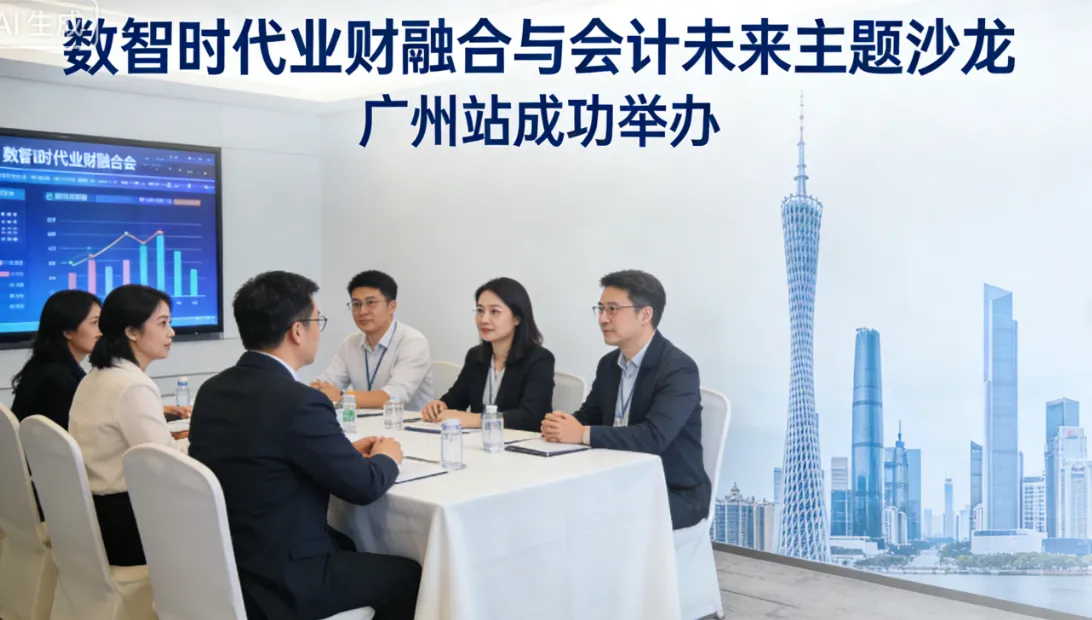
The free communication after the salon continued until 6pm, and there were still many attendees gathered around the guest speakers asking for details. In the exhibition area outside the venue, several technology companies demonstrated intelligent order review robots, real-time consolidation reporting tools, and supply chain finance risk control models. These products were still concepts three years ago, but now they have been embedded in the daily operations of hundreds of enterprises. The Guangzhou Tower on the other side of the the Pearl River is lighting up gradually. This city, known for its pragmatism, is quietly completing an evolution from voucher to algorithm, from accounting to insight, and from history to the future in the field of accounting, which is the most pragmatic and the most resistant to false fire. The final conclusion of the salon host was recorded by many people in mobile phone memos: the integration of business and finance is not about tying business and finance more tightly, but about letting data replace people to cross the once clear boundaries. When boundaries disappear, accounting is not non-existent, but ubiquitous.