
Empowered by Digital Intelligence, Advancing Flexibly - The Current Pattern and Future Trends of Clothing ERP
In the current global wave of digital economy, the clothing industry is undergoing a profound transformation from traditional manufacturing to digitalization. As the "central nervous system" of enterprise operation, ERP system has already broken through the limitations of traditional process management and become a key carrier to support clothing enterprises in responding to market changes and enhancing core competitiveness. From the current popularization of cloud computing and omnichannel integration, to the future deep empowerment of AI and green sustainable development, the evolution trajectory of clothing ERP clearly outlines the path of high-quality development in the clothing industry. Nowadays, clothing ERP has entered a mature stage of deep integration, and in the next 3-5 years, it will accelerate iteration towards a more intelligent, flexible, and ecological direction, reshaping the industry's operational model.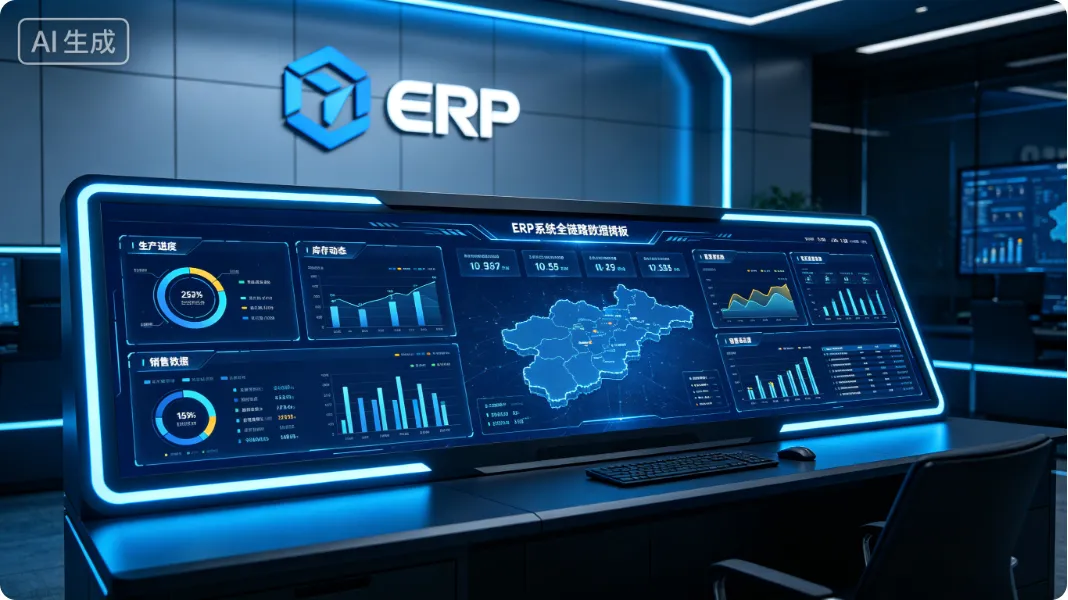
Currently, the clothing ERP industry has formed a distinct pattern of "cloud dominance, vertical adaptation, and full chain collaboration", and the dividends of digital transformation are accelerating. According to industry data, the penetration rate of cloud native ERP has reached 51.2% by 2026, with AI driven products accounting for over 50%. Cloudization and SaaS have become irreversible mainstream trends. Clothing enterprises of different scales present differentiated choices: small and medium-sized enterprises prioritize the adoption of lightweight SaaS models, leveraging the advantages of fast deployment, pay as you go, and low IT investment to quickly achieve digitalization of basic management; Medium and large enterprises tend to prefer hybrid cloud or private cloud architectures, which balance data security with business flexibility and support large-scale operations of multiple brands and formats. Dali (China) Co., Ltd. has established a digital platform by introducing intelligent systems such as ERP and MES, achieving digital management of the entire process of research and development, production, and marketing. This not only improves operational efficiency, but also achieves counter trend growth in revenue, becoming a benchmark case for industry transformation.
The core competitiveness of current clothing ERP lies in the deep integration of all channels and vertical adaptation to the industry. With Generation Z becoming the main consumer force, the lifecycle of clothing products has been significantly shortened, and fast fashion brands have an average annual new product frequency exceeding 3000. At the same time, the integration of multiple channels such as online e-commerce, offline stores, live streaming, and communities has accelerated, and brand owners have laid out an average of more than 6 sales touchpoints, forcing ERP systems to achieve global data connectivity. Nowadays, the omnichannel middle platform has become a standard configuration for medium and large clothing brands, completely breaking down the data silos of orders, inventory, membership, and marketing, and achieving "one inventory" management. Bojun Technology's ERP system achieves real-time inventory synchronization by connecting online and offline omnichannel data, supporting complex marketing activity configuration, and helping well-known brands such as Shanshan Group improve operational efficiency. At the same time, general ERP is gradually withdrawing from the market, and vertical ERP for clothing has become mainstream. Its deep adaptation to the characteristics of "multiple styles, colors, and sizes" in the clothing industry can achieve fine management of styles, colors, and codes, support seasonal styles, ordering events, and quick response modes, cover all scenarios such as accessory BOM, process routes, and store retail, and solve the pain points that traditional ERP is difficult to adapt to industry characteristics.
The popularization of mobility and full chain collaboration have further released the value of clothing ERP. Nowadays, mobile ERP, store Pad/PDA, warehouse scanning, and field approval have become the basic capabilities of ERP systems. Real time data collection and on-site business processing have greatly improved terminal operational efficiency. More importantly, the ERP system has achieved full chain collaboration from planning, design, typesetting, procurement, production to distribution and retail, effectively supporting small order quick response and flexible production models, helping enterprises quickly respond to market demand. Dali (China) has achieved digital collaboration in product design and manufacturing by integrating ERP with digital design software and production equipment, shortening the production cycle from 93 days to 70 days and reducing inventory by 35%, fully reflecting the core value of full chain collaboration. In addition, the initial landing of AI technology has injected new vitality into clothing ERP, with functions such as intelligent sales forecasting, replenishment warning, intelligent production scheduling, and precise member marketing replacing some experiential decision-making, helping enterprises improve operational efficiency and avoid business risks. Bojun Technology's AI prediction engine uses multidimensional data analysis to help enterprises accurately predict sales and resolve inventory backlog and out of stock risks.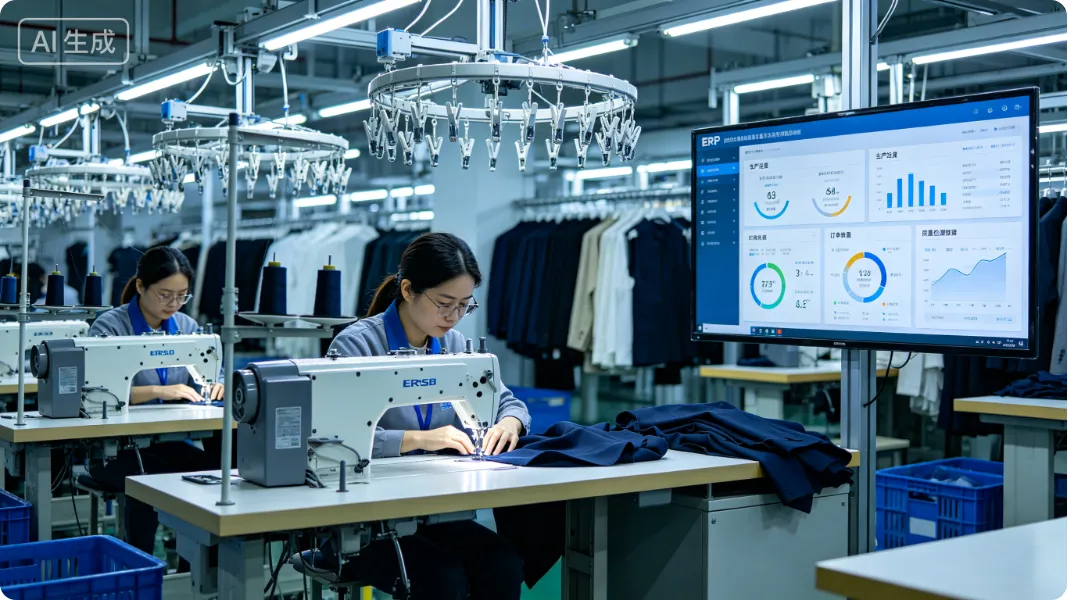
Looking ahead to the next 3-5 years (2026-2030), with the continuous iteration of technologies such as AI, IoT, digital twins, and cloud native, clothing ERP will usher in a new round of transformation, transitioning from "data recording" to "intelligent decision-making+efficient execution" and becoming the core engine for innovation and growth of clothing enterprises. AI deep empowerment will become the most core development trend, and future clothing ERP will integrate multiple sources of data such as fashion trends, social media, and weather to achieve more accurate sales forecasting, intelligent replenishment, and unsold warning; The intelligent scheduling and dispatching function will automatically optimize production plans and material allocation, support multi variety, small batch, and plug-in production, and greatly enhance production flexibility; The application of machine vision technology will achieve automatic detection of fabric and garment defects, replacing manual spot checks and improving product quality; The deep implementation of intelligent supply chain and intelligent retail will achieve functions such as supplier risk assessment, personalized recommendations for thousands of people, and dynamic pricing, further optimizing the entire process of enterprise operation.
The deep integration of IoT and digital twin technology will build an intelligent manufacturing system that combines virtual and real elements, becoming an important upgrade direction for clothing ERP. In the future, sewing machines, hanging threads, AGVs, RFID and other equipment will be fully integrated into ERP systems to collect real-time data on equipment status, working hours, output, energy consumption, etc., achieving full visualization of the production process; The digital twin factory will achieve virtual simulation of production lines, logistics, and scheduling, allowing enterprises to identify production bottlenecks in advance, optimize solutions, and reduce trial and error costs. On this basis, the full chain digital twin will achieve end-to-end virtual mapping from design, supply chain, production to retail, realizing global visibility, controllability, and optimizability, and promoting the development of clothing production towards a more efficient and accurate direction.
Extreme flexibility and rapid response, green sustainability and ESG compliance will become important development dimensions for clothing ERP in the future. With the popularization of SPA mode and the mainstream of small order quick response, future ERP systems will natively support multi batch and short delivery production modes, and order cycles will be compressed from monthly to weekly or even daily levels. Modular and configurable process design will help enterprises quickly adapt to new product categories, new channels, and new modes. Driven by the "dual carbon" policy and global ESG compliance requirements, clothing ERP will gradually integrate carbon footprint tracking functions to achieve full chain carbon emissions accounting from raw materials, production, logistics to sales and recycling. At the same time, real-time monitoring and optimization of environmental indicators such as water consumption, electricity consumption, and waste will be carried out to support green supply chain management and circular economy models. Dali (China) has integrated the concept of green development into its ERP system, achieving a significant reduction in comprehensive energy consumption per 10000 yuan of output value and practicing the low-carbon development concept; The ERP system of Dongfang Enterprise Clothing has launched the Carbon Fire Eye function, which automatically calculates carbon emission data and helps cross-border clothing enterprises comply with EU EPD certification standards to avoid compliance risks.
In addition, cloud native and low code, data-driven and business finance integration, ecologicalization and platformization will jointly promote the development of clothing ERP to a higher level. Cloud native architecture will become standard, realizing the core advantages of elastic scalability, high availability, easy upgrade, and easy integration; Low code/no code platforms will reduce customization costs and cycles for enterprises, allowing them to independently configure processes, reports, and mobile applications. Data driven will replace experience driven, and all decisions will be based on real-time, accurate, and complete data. Business finance integration will achieve automatic association between business documents and financial vouchers, real-time cost collection, and real-time profit accounting, providing strong support for enterprise decision-making. At the same time, ERP will be upgraded from a single system to an enterprise digital platform, connecting internal organizations, upstream and downstream supply chains, channels and consumers, building an industrial Internet ecosystem, realizing data sharing and resource optimization of collaborative design, collaborative procurement, and collaborative production. The ERP system of Dongfang Enterprise Services will help cross-border garment enterprises achieve full link coordination of orders, production, and logistics, and greatly improve cross-border operation efficiency by building a collaborative platform.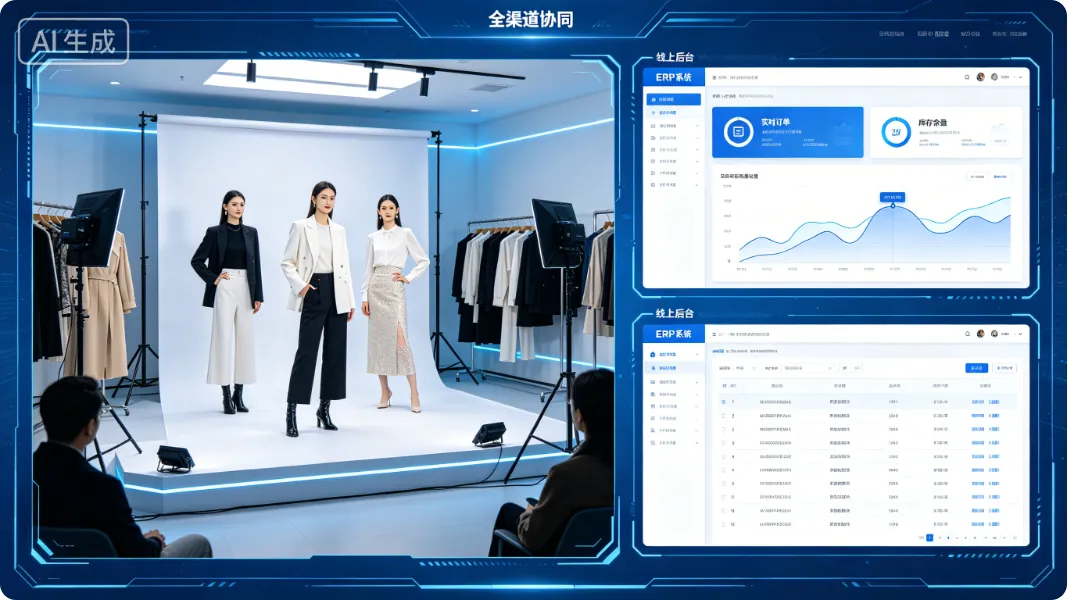
The development of clothing ERP has always resonated with the transformation needs of the clothing industry, from current cloudification, verticalization, and omnichannel integration to future AI deep empowerment, digital twin, and green sustainability. At present, clothing ERP has entered the stage of deep integration, with the core value of connecting data, improving efficiency, and supporting fast response; In the future, it will become the core force driving the transformation of the clothing industry towards intelligence, flexibility, and greenness, helping companies overcome pain points such as inventory backlog, supply chain lag, and operational inefficiencies. For clothing enterprises, only by keeping up with the development trend of ERP, combining their own scale and business needs, and choosing suitable solutions, can they seize the opportunity in the fierce market competition. Whether small and medium-sized enterprises choose lightweight and vertical SaaS products, or medium to large enterprises layout platform level and ecological solutions, focusing on core directions such as AI capabilities, IoT and digital twins, green ESG, etc., can leverage the power of ERP to achieve high-quality development and steadily move forward in the wave of digitalization.