
Analysis of Information Architecture in the Shoe and Clothing Industry: Six Mainstream Models and Digital Transformation Selection Guide
Under the triple drive of consumption upgrading, channel integration, and technological innovation, the Chinese footwear and apparel industry is accelerating its transformation from traditional manufacturing and retail models to digitalization and intelligence. From early single store retail and traditional OEM, to today's omnichannel layout, flexible production, and global operation, the business forms of footwear and apparel enterprises continue to iterate, and the demand for information technology construction has been upgraded from basic process specifications to core capabilities supported by full chain collaboration and data-driven. As the "skeleton" of enterprise digital transformation, the selection and implementation of information architecture directly determine the operational efficiency, market response speed, and core competitiveness of the enterprise. This article will systematically analyze the mainstream information construction architecture in the current footwear and apparel industry, and provide clear architecture recognition and selection references for footwear and apparel enterprises of different scales and business models by combining industry pain points and practical cases.
The footwear and apparel industry has distinct characteristics such as a wide variety of product SKUs, fast style iteration, diverse channels, and complex production processes. Whether it is a small OEM factory, a medium-sized chain brand, or a large group enterprise, they all need an information architecture that adapts to their own business scenarios. At present, the mainstream information construction architecture in the industry is mainly divided into six categories, each carrying the digital transformation needs of enterprises of different scales, forming an architecture system covering the entire lifecycle of "start-up growth maturity leading".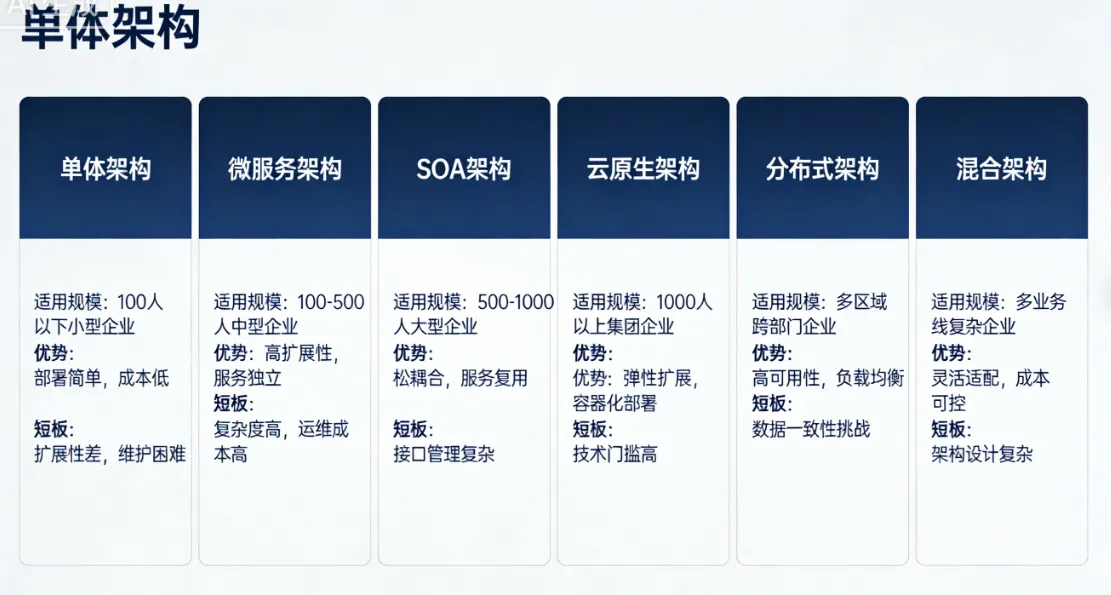
1、 Single architecture: an entry-level choice for small footwear and apparel enterprises
As the most traditional centralized architecture, monolithic architecture is the preferred choice for small footwear and apparel enterprises to embark on the path of digitization. The core logic is to package and integrate all business functions such as procurement, production, inventory, sales, and finance into a single application, share a database, and adopt a centralized deployment model. The biggest advantage of this architecture is its simple development and deployment process, low initial investment cost, no need for a professional technical operations team, low difficulty in getting started, and the ability to quickly meet the basic digital needs of small businesses.
From the perspective of adaptation scenarios, the monolithic architecture is mainly suitable for small shoe factories with a staff size of ≤ 50 and simple business processes, couple stores, single store retailers, as well as start-up shoe and clothing enterprises. These types of enterprises usually only require basic inventory management and simple financial accounting functions, without the need for multi-channel or multi factory collaboration, and have low requirements for system scalability. In practical applications, small customized ERP systems such as Changjietong T+and Guanjia Po are typical representatives of monolithic architecture, which can help enterprises quickly achieve a preliminary leap from manual bookkeeping to digital management.
Of course, the limitations of monolithic architecture are also very obvious. Due to the high coupling of all modules, a single action can affect the entire system. Once a certain function fails, the entire system may be affected; At the same time, the design of a single database leads to weak concurrency capabilities in the system. When the business scale of the enterprise expands and the amount of data surges, problems such as system lag and slow response are prone to occur, making it difficult to support the long-term development of the enterprise.
2、 Hierarchical Architecture: Standardization Support for Medium sized Shoe and Clothing Enterprises
With the expansion of shoe and clothing enterprises and the gradual standardization of business processes, the limitations of monolithic architecture are becoming increasingly prominent, and layered architecture has become the mainstream choice for medium-sized enterprises. The hierarchical architecture is based on "vertical splitting and clear responsibilities", dividing the system into four levels according to responsibilities: presentation layer, business logic layer, data access layer, and infrastructure layer. The layers adopt a one-way dependency mode, and each level performs its own duties without interfering with each other.
The core advantage of this architecture lies in clear responsibilities, easy maintenance, fast onboarding speed for new employees, and the ability to quickly adapt to standardized and regulated business needs of medium-sized enterprises. At the same time, layered design greatly improves the maintainability of the system. When a certain level needs to be optimized and upgraded, there is no need to modify other levels, reducing the risk and cost of system iteration. For medium-sized shoe and clothing brands with a staff size of 50-300, multiple store chains, and stable production or wholesale processes, a layered architecture can effectively standardize business processes, achieve data statistics and report analysis, and balance stability and practicality.
At present, SAP Business One、 Enterprise level ERP systems such as UFIDA U8 and Kingdee K/3 adopt a layered architecture design, becoming the core information tools for medium-sized footwear and apparel enterprises. However, the layered architecture also has obvious shortcomings, such as high intra layer coupling and weak horizontal scalability. When enterprise business enters a period of rapid expansion, especially after opening up omni channel layout, it is difficult to meet the flexible adaptation needs of high concurrency and multiple scenarios.
3、 Microservice Architecture: A Flexible Iterative Engine for Large Group Enterprises
For large shoe and clothing groups with a staff size of ≥ 300, layout of omni channel retail, multi factory collaboration, and facing high power market scenarios, microservice architecture has become the core architecture supporting their digital transformation. The core of microservice architecture is to divide enterprise business into independent service modules by domain, such as product center, order center, inventory center, member center, production center, financial center, etc. Each service module can be independently developed, deployed, and expanded, and communication between modules is achieved through API interfaces or message queues.
Compared to traditional architectures, the advantages of microservice architecture are particularly prominent. One is service autonomy and fault isolation. When a service module encounters a problem, it will not affect the normal operation of other modules, reducing the overall risk of the system; Secondly, it supports parallel development by multiple teams, which can quickly respond to market changes and meet the needs of the footwear and apparel industry for fast style iteration and frequent marketing activities; Thirdly, it can be flexibly expanded according to business needs, making it easy to cope with peak concurrent scenarios such as e-commerce promotions, ensuring stable system operation.
In practice, large shoe and clothing groups often adopt a system based on The self-developed microservice system of NET/Java, mature solutions such as Baisheng E3+microservice and Bojun Zhongtai microservice have also been widely applied. However, the operation and maintenance complexity of microservice architecture is relatively high, requiring a professional technical team for service governance and distributed transaction management. The initial investment cost is high, and the technical strength requirements for enterprises are relatively strict. Therefore, it is more suitable for large group enterprises with certain technical foundations.
4、 Cloud native SaaS architecture: a lightweight transformation path for small and medium-sized footwear and apparel enterprises
With the popularization of cloud computing technology, cloud native SaaS architecture has become a new choice for digital transformation of small and medium-sized shoe and clothing enterprises due to its advantages of "lightweight, low cost, and easy deployment". This architecture is based on public cloud and uses containers (Docker) and orchestration (K8s) as the technical foundation. It is delivered in a SaaS model, and enterprises do not need to build their own servers. They can use it on demand through subscription, achieving "out of the box" functionality.
The core feature of cloud native SaaS architecture is low operation and maintenance costs. Service providers are responsible for server maintenance, system upgrades, data backup, and other work, and enterprises do not need to invest in professional operation and maintenance teams; At the same time, the system has automatic expansion, high availability, and remote disaster recovery capabilities, and ensures enterprise data security through technologies such as AES encryption and two location three centers. For small and medium-sized shoe and clothing brands with limited budgets, pursuing lightweight operations, requiring mobile management (such as mini programs and apps), rapidly expanding chain enterprises, and e-commerce brands, cloud native SaaS architecture can achieve digital upgrades at a lower cost and quickly adapt to business development needs.
At present, YonBIP Footwear Cloud, DingTalk Yidai SaaS, SaaS version of Yishen/Baisheng, and other solutions from YonBIP provide lightweight SaaS services for footwear and apparel enterprises. But this architecture also has certain limitations, its customization ability is limited, and it may not be fully compatible with enterprises with special business processes and high levels of personalized requirements; At the same time, some enterprises have concerns about data going to the cloud and prefer a local deployment model. Based on industry trends in 2026, choosing SaaS mode for small and medium-sized shoe enterprises can significantly reduce initial investment, with an average annual investment of only 30000 to 80000 yuan, far lower than the cost of locally deployed servers and operations.
5、 Omnichannel middle platform architecture: the core of global collaboration for medium and large brands
Against the backdrop of omnichannel integration becoming the mainstream trend in the industry, "one inventory" management, global membership operation, and intelligent order fulfillment have become the core demands of medium and large shoe and clothing brands, and omnichannel middle platform architecture has emerged. This architecture takes the commodity center, order center, inventory center, member center, and marketing center as the core middleware base, connecting all front-end channels (stores, e-commerce, live streaming, distribution) with back-end supply chain and production data, achieving "global data interoperability and resource sharing".
The core value of the omni channel middleware architecture lies in breaking down data silos, achieving front-end multi terminal unity, and back-end capability reuse. Through unified inventory management, enterprises can achieve real-time sharing of inventory across all channels, intelligently allocate inventory, avoid situations of "online stockouts and offline backlogs", and improve inventory turnover efficiency; By unifying the membership center, it is possible to achieve universal membership, connect online and offline membership benefits, and enhance member stickiness and repurchase rates; Through a unified order center, intelligent fulfillment of orders can be achieved, delivery routes can be optimized, and customer experience can be enhanced. As demonstrated by ShopeX's solution, the omnichannel center can achieve intelligent order processing through the OMS system, solving problems such as multi-source heterogeneous orders and inefficient sourcing decisions, and supporting the development of brand O2O omnichannel integration.
This architecture is mainly suitable for medium to large shoe and clothing brands with 20+stores, integrated online and offline layout, and multi brand/multi-channel operation. The mature solutions in the industry include Yishen omni channel middle platform, Baisheng omni channel solution, Bojun middle platform, etc. However, the implementation cycle of the omnichannel middle platform architecture is relatively long, the system complexity is high, and the initial investment cost is high, requiring enterprises to have a certain digital foundation and financial strength.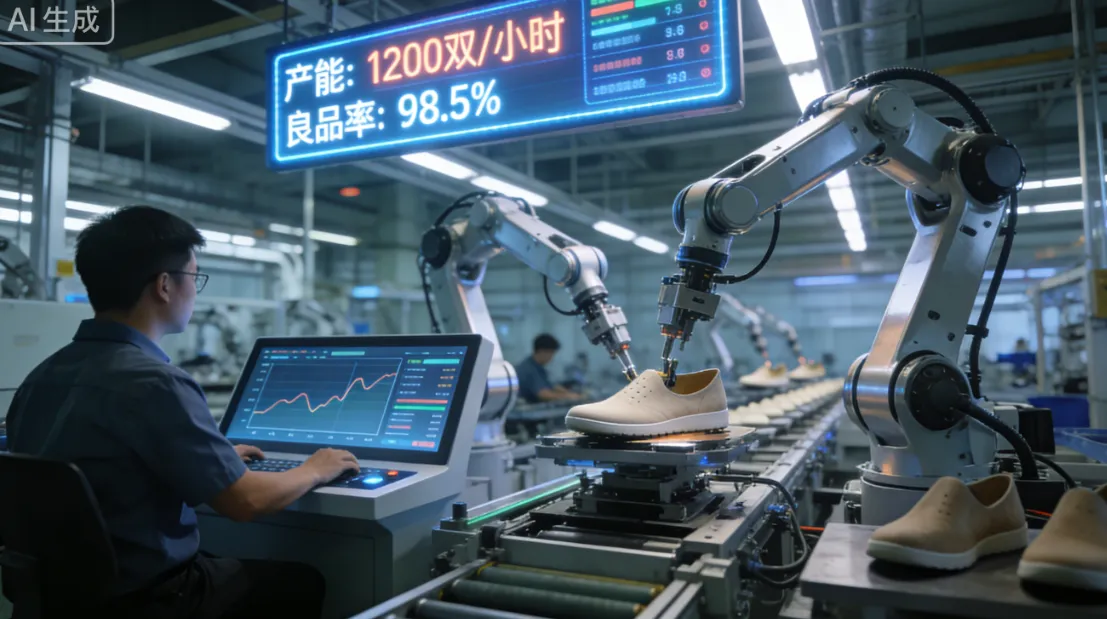
6、 Intelligent Manufacturing Architecture: An Efficiency Revolution for Production oriented Shoe and Clothing Enterprises
For shoe and clothing enterprises with their own factories, OEM brands, and a focus on production over retail, digitalization and lean production processes are key to enhancing core competitiveness, and intelligent manufacturing architecture has become their inevitable choice. This architecture is centered around an ERP system and deeply integrates MES (Manufacturing Execution System), WMS (Warehouse Management System), PLM (Product Lifecycle Management System), and IoT technologies (RFID, barcode, visual recognition, etc.), covering the entire production chain from product design, production planning, process scheduling, workshop production, to warehouse management and quality inspection, achieving transparency, traceability, and lean production processes.
The technical characteristics of intelligent manufacturing architecture are very distinct, which can achieve fine BOM management (such as multi-level management of shoe uppers, shoe soles, and accessories), process level scheduling, and real-time production capacity monitoring through workshop QR code reporting and equipment networking; At the same time, it can optimize the utilization rate of leather and fabric, achieve full traceability of product batches and serial numbers, effectively reduce production losses, improve production efficiency, and ensure product quality. The practice of Futuo Footwear in Putian City is a typical case. The enterprise introduced the 5G+AGV intelligent warehousing and logistics project, combined with an automated production line, to achieve a 30% increase in production efficiency, a 40% reduction in research and development cycle, a 30% decrease in operating costs, a 45% decrease in product defect rate, and an annual savings of over 2.5 million yuan in labor and warehousing costs. It has become a benchmark for digital transformation in the industry.
At present, Dingjie T100 Smart Factory, UFIDA U9 Cloud+MES, SAP S/4HANA+MES and other solutions have provided comprehensive intelligent manufacturing solutions for production-oriented shoe and clothing enterprises. However, the implementation threshold of this architecture is relatively high, requiring not only a large amount of investment in system construction and IoT hardware matching, but also standardized transformation of production processes by enterprises, which requires high requirements for the production management level and technical strength of enterprises. Based on the trend of footwear and apparel manufacturing in 2026, intelligent manufacturing will also integrate technologies such as AI scheduling and digital twins to help enterprises achieve flexible production and adapt to the market demand for small batches and multiple varieties.
7、 Architecture selection: Adapting to oneself is the key to achieving stability and long-term success
The six mainstream architectures each have their own advantages and disadvantages, and are suitable for shoe and clothing enterprises of different scales and business models. Blindly pursuing a "high-end, comprehensive" architecture may actually lead to resource waste and difficulties in implementation; Choosing an architecture that does not match their own business will constrain the development of the enterprise. Based on industry practice and selection experience, the following provides clear selection suggestions for footwear and apparel enterprises, while avoiding common misconceptions:
From the perspective of enterprise scale and business scenarios, small shoe factories and single store retail enterprises should prioritize single architecture or cloud native SaaS architecture to quickly achieve digital entry at low cost, without the need to pursue complex functions, and focus on core inventory and financial management; Medium sized brands and multi store chain enterprises can choose a layered ERP+cloud deployment model, which balances system stability and cost, and meets the requirements of process standardization and report analysis; For large conglomerates and omni channel operating enterprises, it is recommended to choose a microservices+omni channel middleware architecture to support high concurrency, fast iteration, and global collaboration needs; Self owned factories and production-oriented enterprises must be equipped with intelligent manufacturing architecture to achieve production efficiency improvement and cost optimization through the deep integration of ERP+MES+WMS+IoT.
In the selection process, enterprises need to be wary of three common misconceptions: firstly, blindly pursuing a universal architecture and ignoring the particularity of the footwear and apparel industry, such as BOM management, process flow and other segmented scenarios. It is recommended to prioritize choosing industry vertical version solutions; Secondly, there is an excessive pursuit of localized deployment, where small and medium-sized enterprises do not have to bear the high costs of servers and operations, and the SaaS model is more cost-effective; The third is to ignore data migration compatibility and avoid losing core information due to the system's inability to interface with old data. At the same time, it is also necessary to pay attention to the industry experience, implementation capabilities, and after-sales support of suppliers to avoid the problem of unmanned maintenance after the system is implemented.
Conclusion
Digital transformation has become the inevitable path for the footwear and apparel industry, and information architecture is the core support for successful transformation. With the continuous iteration of technologies such as AI, cloud computing, IoT, etc., the information architecture of footwear and clothing enterprises is also developing towards a more flexible, intelligent, and collaborative direction, upgrading from a single process management to a full chain data-driven and full domain collaborative operation.
For footwear and apparel enterprises, there is no "optimal solution" for information technology construction, only the "best fit". Enterprises need to choose a suitable information architecture based on their own scale, business model, development stage, and core demands, and gradually promote digital implementation - small enterprises focus on "sufficient and low-cost", medium-sized enterprises pursue "standardization and efficiency", large enterprises create "flexibility and collaboration", and production-oriented enterprises focus on "lean and intelligent". At the same time, enterprises also need to pay attention to industry technology trends, optimize and upgrade their architecture in a timely manner, break down data silos, and achieve full chain collaboration in order to stand firm in fierce market competition and achieve high-quality development. In the future, with the deepening application of more intelligent technologies, the information architecture of the footwear and apparel industry will further integrate and innovate, injecting new momentum into the industry's development.